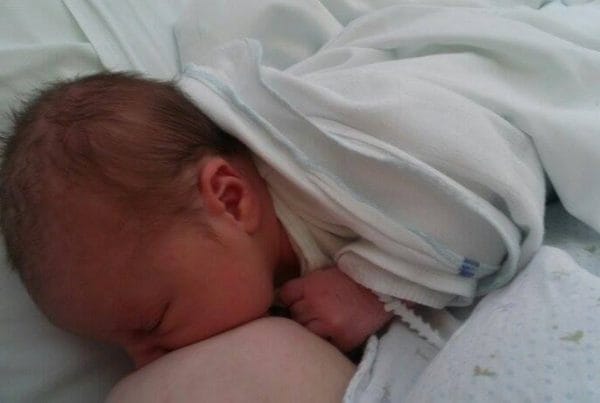
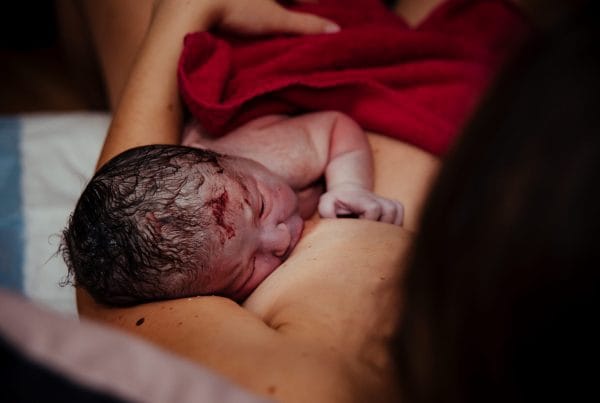
I put my baby girl to the breast for the first time within the first hour after birth and she started sucking diligently quite quickly. I had learned about the need to put the newborn to the breast soon after birth and all other things about breastfeeding by reading books, attending a breastfeeding support group, and going to prenatal classes. Despite all the preparation, I often felt completely lost and desperate during breastfeeding and about breastfeeding.
In the maternity ward, I put her to the breast regularly—sometimes on my own, sometimes with the help of nurses—and always when my baby girl showed interest. After just one day, my flat nipples became red, cracked, and incredibly painful. Breastfeeding was terribly painful for me, tears would flow along with a few drops of blood, and I would sweat terribly. Of course, I persevered and was optimistic that it would get better soon. I was already using Multimam compresses and creams in the hospital, but they didn’t help at all—even my pajamas touching my nipples bothered me.
They kept us in the hospital one day longer because my daughter had lost more than 10% of her birth weight. It wasn’t until the third day after birth that my breasts filled with milk in a way that I could actually feel. At home, in a relaxed environment, we diligently continued breastfeeding, and I put her to the breast very often. She would nurse for a long time because she would doze off a bit during feeding, but if I tried to take her off, she would quickly start sucking again. Breastfeeding was very exhausting for me because the feeds were long and frequent, and my nipples were terribly painful.
One week after discharge from the hospital, we had a weight check and found that despite regular breastfeeding, she had only gained 40g. We did a breastfeeding assessment by weighing her before and after feeding, and this time too, despite encouragement, she fell asleep and the difference in grams was only 40. We were given formula. We offered her formula 2 or 3 times a day after breastfeeding, but she mostly ‘spilled’ it. At the check-up a week later, she had gained 10g. We were given a different formula that works as an anti-reflux. By the next check-up, we had finally gained a satisfactory amount of weight.
During this period, I breastfed with nipple shields because the condition hadn’t improved at all 14 days after birth, and I was really struggling to put her to the breast. With the shields, it was somewhat better, though still painful.
When she was about a month old, I got mastitis. Suddenly fever, a hardened breast. With compresses and massage, I managed to resolve the situation overnight on my own. I get mastitis and she needs formula, and two weeks later mastitis with a 40°C fever, which landed me on antibiotics because there was no other way. And at the same time, I was desperate because I was breastfeeding whenever my baby girl wanted, encouraging her not to fall asleep during it, gritting my teeth from the still-present pain when putting her to the breast, and yet she still needed formula in addition to breastfeeding. I consulted with the pediatrician and read all the advice from breastfeeding experts. Then I somehow came to terms with the fact that what matters is that my baby girl is thriving and content. I stopped blaming myself, which I had been doing before even though I didn’t know exactly what for. 🙂 I valued every feed and thought that combination feeding was better than formula alone. I decided that I would just breastfeed with shields throughout.
At two months old, I slowly removed the shields. Breastfeeding is now, at three months old, finally pleasant and pain-free, even though I no longer believed that was even possible. At two months, my baby girl suddenly started refusing formula and was completely satisfied with breastfeeding alone.
At three months, she nurses every 2-4 hours. She nurses for 15 to 20 minutes. We no longer need formula. My nipples don’t hurt.
I never thought I would write these last sentences. It took quite some time, but we finally became such a team in breastfeeding that we can fully breastfeed and enjoy it together. I’m glad I persevered despite all the obstacles and challenges.
When someone asks me what childbirth was like, I tell them that childbirth isn’t that hard at all—breastfeeding is hard, very hard.