
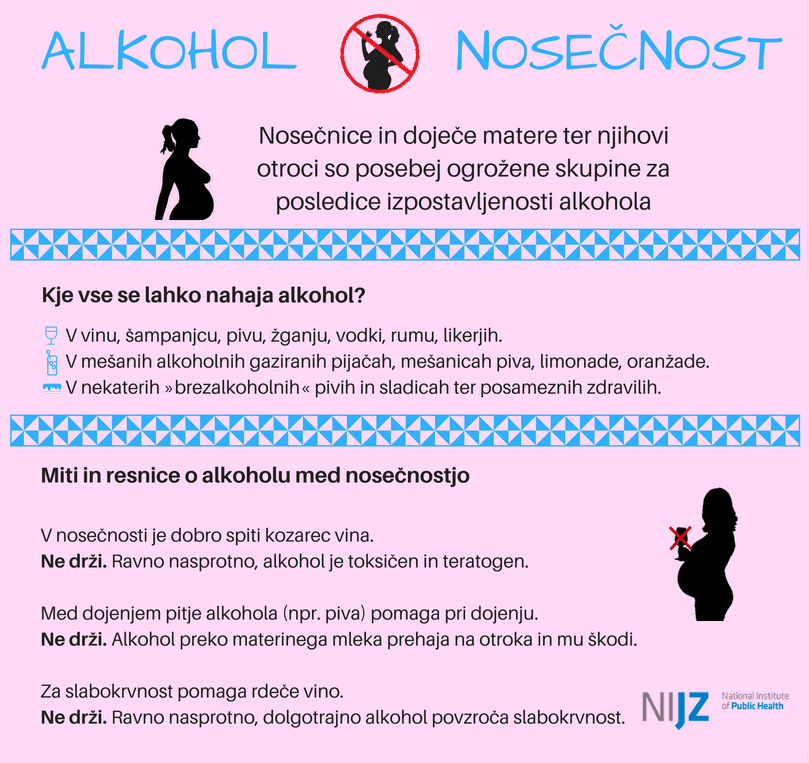
We don’t know exactly how much alcohol, if any, is safe to drink during pregnancy. The problem with drinking alcohol during pregnancy is that no amount has been proven to be safe (Moritz, 2012).
I can say that alcohol and pregnancy don’t go together. No one knows exactly what the potential harmful effects of even the smallest amounts of alcohol are on a developing baby.
Various professional sources (such as the American College of Obstetricians and Gynecologists; American Academy of Pediatrics) recommend that pregnant women (and women trying to conceive) abstain from drinking alcohol entirely.
Possible Effects of Drinking Alcohol During Pregnancy on the Baby
Alcohol can disrupt normal fetal growth and cause problems during childbirth. If a woman drinks alcohol during pregnancy, her fetus can develop physical, intellectual, behavioral, and learning problems that can last a lifetime. The most severe disorder is Fetal Alcohol Spectrum Disorder (FAS). FAS can cause growth problems, intellectual disabilities, behavioral issues, and abnormal facial features (ACOG, 2017).
When you drink, alcohol quickly travels through your bloodstream, crosses the placenta, and reaches the fetus. Your baby metabolizes alcohol more slowly than you do, so they will have a higher blood alcohol level.
Drinking alcohol during pregnancy puts your baby at risk in several ways:
– It increases the risk of miscarriage and stillbirth.
– Daily alcohol consumption during pregnancy increases the likelihood of miscarriage or giving birth to a baby with low birth weight and increases the risk of later problems with learning, speech, attention, etc.
Some studies have shown that children of pregnant women who drank one glass of alcohol daily were more likely to display aggressive behavior, and the likelihood of developing mental health problems also increased.
Consequences of FAS
- intellectual disability due to smaller, partially developed brains,
- difficulty following instructions and learning simple things,
- disorders in sleep, attention, memory, learning, and speech,
- behavioral disorders (impulsivity, hyperactivity, defiance),
- impaired hearing, vision, speech,
- other health problems (congenital heart defects, kidney, liver, and bone damage),
- characteristic facial appearance,
- dropping out and abandoning school,
- inability to live independently,
- additional mental health problems or psychiatric disorders,
- increased risk of alcohol and drug addiction (NIJZ, 2015).

Non-Alcoholic Beer and Wine During Pregnancy
The term “non-alcoholic” can be somewhat misleading when it comes to beer and wine. Beverages labeled as “non-alcoholic” may contain alcohol, though the amount is usually less than 0.5 percent (for comparison, regular beer typically contains about 5 percent alcohol). Therefore, caution is advised when consuming these beverages. I suggest checking the label and making sure of the alcohol content, or abstaining from these drinks entirely.
Some Tips for Avoiding Alcohol During Pregnancy:
- If you’re invited to a party and don’t know whether non-alcoholic drinks will be available, bring your own.
- Arrive at the party later and leave earlier.
- Drink only non-alcoholic beverages; if you doubt whether a drink contains alcohol, drink water instead.
- If you’re offered an alcoholic drink, politely decline—you don’t have to explain why you don’t want to drink alcohol.
- Avoid the bar area and keep yourself occupied, for example by dancing or socializing in other ways.
- If you feel tempted by alcohol, leave the party.
- Under no circumstances should you drink alcohol (NIJZ, 2016).
Breastfeeding and Alcohol
After consumption, alcohol passes into the bloodstream and consequently into breast milk. While the amount of alcohol that passes into breast milk after drinking a glass of wine is relatively small, your baby is tiny and their liver is not ready to process alcohol. This means they cannot metabolize alcohol as efficiently as an adult. Infants younger than 3 months metabolize alcohol about half as slowly as an adult.
Studies show that alcohol in breast milk can affect infant feeding and sleep (for example, babies whose breastfeeding mothers drank alcohol slept for shorter periods; they consumed 20 percent less milk).
The effects of alcohol on breastfeeding and infants are not fully researched, but it has been found that ethanol can be detected in breast milk after drinking “non-alcoholic” beer (Schneider C, Thierauf A, Kempf J, Auwärter V., 2013). Cases of impaired motor development, changes in sleep patterns, reduced milk consumption, and hypoglycemia have been identified (Koren, 2002).
Alcohol is not a galactagogue and can reduce the prolactin response to suckling and negatively affect the child’s motor development. Therefore, consumption of alcoholic beverages should be reduced or limited to occasional use, but not more than 0.5 g of alcohol per kg of body weight. It is recommended that breastfeeding be done 2 hours or more after alcohol intake to reduce its concentration in breast milk (American Academy of Pediatrics – Breastfeeding and the use of human milk, 2012).
Breastfeeding mothers who choose to drink alcohol in the postpartum period must carefully plan their breastfeeding schedule by storing milk before drinking alcohol and waiting for complete elimination of alcohol from their breast milk after consumption (Koren, 2002).
Although we don’t know all the effects of alcohol on breastfed babies, it’s wise to abstain from alcohol while breastfeeding, at least in the beginning.
If you drink alcohol during pregnancy or breastfeeding, it’s never too late to stop. The sooner you stop drinking, the better it will be for your baby and for you.
On September 9, we observe International Fetal Alcohol Spectrum Disorder Awareness Day—FAS Day. The basic message of September 9 is that women should not consume alcohol for all nine months of pregnancy. Drinking alcohol is also discouraged during pregnancy planning and breastfeeding.
The National Institute of Public Health has published a brochure “Alcohol and Pregnancy,” which is available at this link.
https://www.youtube.com/watch?v=S_OpfuOA-UY
SOURCES:
Source1, Source2, Source3, Source4, Source5, Source6, Source7, Source8, Source9, Source10


