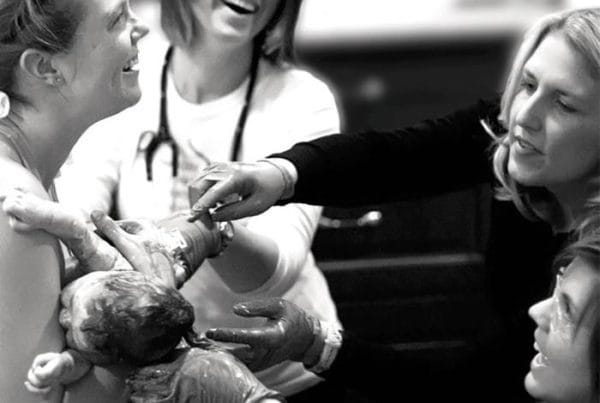
Young midwives come with basic knowledge from school and can learn practical skills from the experience of older colleagues. Therefore, it is important to pass on this knowledge to new generations. Over time, small things become ingrained in us, and we no longer consciously think about them. And when we introduce routines into systems, these routines must be based on three things: knowledge, experience, and conducted studies.
Midwives work based on experience, doctors on studies, but we all tend to forget basic knowledge. This is how we can work with scientifically supported evidence. If something is not normal, it is NOT abnormal! The normal range, however, can vary.
For example, from the first contraction to birth, 3 hours or 23 hours can pass, and everything is still normal. Even below or above this time, something can still be normal, but there is greater variation within what is considered normal. The range therefore expands.
When conducting studies, we must understand that our baseline is broad, so the question is how our study can address our wide range. It is important to understand studies. We must always consider that the norm can be broad and diverse.
MIDIRS – Midwifery Journals, Article Database
Wise Woman Way of Birth – Gloria Lemay birth blog
Midwives Alliance – North America
Local Supervising Authority Midwifery Officers Forum UK
European Court of Human Rights
Nurturing Hearts Birth Services
World Health Organization – WHO
NCBI – The National Center for Biotechnology Information
National Institute of Public Health
American Congress of Obstetricians and Gynecologists
La Leche League International – LLLI