Sudden Unexpected Infant Death (SUID) is the death of infants in which the manner and cause of death are not known before investigation (National SUID/SIDS Resource Center, 2007). SUID is not a diagnosis.
The term Sudden Infant Death Syndrome (SIDS) was first used at an international conference on the causes of sudden infant death. The current definition of SIDS dates from 1991 and is defined as the sudden death of an apparently healthy child under one year of age that remains unexplained after a thorough investigation, despite autopsy, death scene simulation, and review of medical history (Program Manual, 2010; Stephen et al., 2009). Infants aged 2–4 months have a higher risk of SIDS, while most deaths occur in children by the sixth month of life (Athanasakis et al., 2011; Hunt and Hauck, 2006). The differential diagnosis of SIDS also includes suffocation or drowning, heart disease (arrhythmia), electrolyte disturbances or dehydration, poisoning, trauma, infections (pneumonia, sepsis, meningitis), and congenital metabolic disorders (Hymel Kent, 2006).
SIDS is one of the oldest described syndromes, as it is found in a source more than three thousand years old (the Book of Kings in the Old Testament) in the so-called Judgment of Solomon, when King Solomon must resolve a dispute between two women about whose infant survived the night. Until the mid-1960s, the syndrome remained relatively unknown, but then there was a real boom in various theories about the causes of SIDS during sleep (Neubauer, 2011).
SIDS is still the most common and leading cause of death in the postneonatal period; the incidence is 0.6/1000 births; peak incidence between the eighth and fifteenth week; 90% in the first six months (Prosen and Roškar, 2008). During the study period, the SIDS rate in Slovenia was around 0.07/1000 live births and did not change significantly thereafter (Carpenter et al., 2004). The incidence of SIDS is more common in winter months (American Academy of Pediatrics, 2011a), in low-income families, among premature infants or those who were resuscitated after birth, among siblings of children who died from this syndrome, and among children of mothers who smoke (Berkow, 2000). The actual mechanism of death is not yet known, although risk factors have been identified (Mitchell, 1997 cited in Machaalani and Waters 2008). When an infant dies unexpectedly without a clear cause, this is called crib death or SIDS (Bregant et al., 2005). SIDS and SUID typically occur during sleep (Krous et al., 2004), and the current long-standing hypothesis is that SIDS results from abnormal cardiac and/or respiratory function (Hunt, 1992 cited in Machaalani and Waters, 2008). The theory of some very distinguished and well-known scientists from the Karolinska Institute claims that extremely severe and terrifying dreams, which cause the infant’s heart to stop during sleep, may also be the cause (Neubauer, 2011).
The clinical features of SIDS and SUID are similar: infants in both groups are in poorer health and have had a previous apparent life-threatening event (Ball and Volpe, 2013), as described in section 5.10.1. The essential difference between SIDS and SUID is the presence or absence of external risk factors; the main difference in risk factors between SIDS and SUID is sleep position. Prone sleeping was identified as the main risk factor for SIDS but was not associated with increased risk for SUID (American Academy of Pediatrics, 2011a). Cases of SUID that remain unexplained after thorough investigation, including autopsy and review of medical history, are classified as SIDS (Venemman et al., 2007). In rare cases, SUID is defined as natural death. In such cases, the forensic pathologist must analyze and explain the circumstances of the case at their discretion (Virginia Department of Health, 2007).
An important controversy revolves around the pathophysiology of SIDS. Three common findings at autopsy of infants diagnosed with this cause of death are unclotted blood within the heart cavities, petechial hemorrhages, and fluid-filled organs that are significantly heavier than normal (Goldwater, 2003; Adams et al., 2009). However, these findings provide little help in understanding the pathophysiology. The child’s death is the first symptom of SIDS (Burja, 2005).
Petechial hemorrhages are small hemorrhages of unknown cause that appear on the surface of an organ and in organ tissues. It is generally accepted that petechial hemorrhages are very common in SIDS. Such hemorrhages appear on the conjunctiva or any other soft tissues of the head and neck, thymus, lungs, abdominal peritoneum, and pericardium (a sac-like serous membrane with two layers surrounding the heart), with distribution and density significantly different from those in drowning (Goldwater, 2008; Byard and Kraus, 2001). Petechial hemorrhages occur in 68%–95% of SIDS cases (Hunt and Hauck, 2006; Byard and Krous, 2001). Pulmonary congestion is present in 89% of SIDS cases and pulmonary edema in 63% of SIDS. Nearly two-thirds of children had structural evidence (tissue markers) of chronic low saturation and certain biochemical markers of asphyxiation (Hunt and Hauck, 2006).
Brain changes at autopsy of children who died from SIDS, in addition to several recognizable changes in the lungs, also found changes in other organs, such as in the structure and function of the brainstem (Hunt and Hauck, 2006). Results of some studies show that many children who died from SIDS had changes in the brainstem nuclei, the part of the brain that likely helps control breathing and arousal (Burja, 2005).
Newborns born with other deficiencies in the brain or other organs are also more prone to SIDS. All these abnormalities may result from exposure of the developing fetus to various toxic substances or lack of oxygen (e.g., smoking during pregnancy greatly reduces the fetus’s oxygen supply) (Burja, 2005).
SOME POSSIBLE CAUSES OF SIDS
Current literature supports the so-called “triple risk model,” which suggests that SIDS is the final common pathway of three coinciding factors (Adams et al., 2009). A zygote with an inherited genetic predisposition change, affected by a prenatal or neonatal risk factor (e.g., premature birth, maternal age or smoking during pregnancy), creates a vulnerable infant. If a vulnerable infant between 3 weeks and 1 year of age encounters an environmental trigger (e.g., prone sleeping, overheating during sleep), it can cause SIDS (Cornelius, 2010). According to this theory, the child must have an underlying vulnerability (e.g., premature birth, maternal smoking during pregnancy) and only then emphasize the influence of external causes, such as prone sleeping. Stress during a specific developmental period, namely the first year of life, is crucial for the actual occurrence of SIDS. The last two risk factors (developmental risk and environmental triggers) in this model are well researched and defined in the medical literature, but the underlying vulnerability of children still needs to be defined. Current SIDS research areas include studies on ion channel abnormalities, autonomic nervous system disorders, and the effects of nicotine on infant brain development. Exposure to cigarette smoke has been a known risk factor for SIDS for more than 30 years. Nicotine exposure has been clearly linked to SIDS as well as premature birth, autonomic dysfunction, low birth weight, and spontaneous abortion (Adams et al., 2009).
Long QT Syndrome and Heart Changes
Long QT syndrome (the name refers to the interval between the Q and T waves on an electrocardiogram) is a heart disease that causes syncope, seizures, and sudden death, most often in young, otherwise healthy individuals (Opdal and Torleiv, 2011). Recent research suggests that prolonged QT interval may be an important cause of SIDS (Mazić, 2007).
Long QT syndrome causes abnormalities in the heart’s electrical system. The mechanical function of the heart is completely normal. Electrical conduction problems arise from defects in ion channels, which are integral parts of heart muscle cells. Due to these electrical abnormalities, patients have a higher probability of rapid heartbeat attacks (arrhythmias), which can cause them to suddenly lose consciousness (called syncope); they can also cause SIDS. The frequency is not known, but it appears to be a more frequent cause of sudden and unexpected death in children, adolescents, and young adults (Mazić, 2007). Quaglini et al. (2006) believe that 1 in 2,000 newborns has such a proven genetic defect. Long QT syndrome is associated with polymorphisms of sodium and potassium channels. It is generally estimated that 5%–10% of SIDS cases are associated with cardiac ion channel defects, increasing the potential for fatal arrhythmia (Hunt and Hauck, 2006).
The results of a study (Graham Rowe, 2004) conducted on 50,000 healthy newborns in Italy are interesting. They had an electrocardiogram recorded in the first week of life and were followed until one year of age. In the group of children with certain ECG changes detected immediately after birth, a 40-fold increased risk of SIDS was confirmed. The conclusions of this study indicate the possibility of screening newborns for increased risk and perhaps even preventing SIDS (Burja, 2005).
Infections and Immune System Abnormalities
Viral respiratory infections are very common with SIDS. A mild degree of viral respiratory infection was found by researchers in 80% of SIDS cases. Toxins produced by E. coli and S. aureus bacteria pose a particular danger to the infant’s life. The toxins of these bacteria, absorbed by the mucosa, indicate bacteremia and primarily affect the cardiovascular and respiratory systems (Athanasakis, 2011). Approximately half of SIDS victims were reported to have a mild upper respiratory infection before death (Opdal and Torleiv, 2011). Increased risk of SIDS was found in infants who sleep prone and are heavily wrapped in blankets (Hunt and Hauck, 2006), as this increases colonization of S. aureus bacteria through the nasal opening (Harrison et al., 1999, cited in Highet, 2008).
Many SIDS victims have an inactive immune system and are consequently more susceptible to infections (Opdal and Torleiv, 2011). In some infants who died from SIDS, increased immune system activity and increased production of proteins were demonstrated, some of which can react with the brain to alter heart rhythm and breathing during sleep or put the infant into deep sleep. Such effects can be strong enough to cause the infant’s death when the child also has changes in certain brain centers (Burja, 2005).
Metabolic Diseases
Infants born with a specific metabolic disorder may be more susceptible to SIDS. Some SIDS cases can be attributed to complications of unrecognized metabolic diseases (Chace et al., 2003). Lack of an enzyme for normal fatty acid metabolism causes accumulation of abnormal metabolic metabolites, which can suddenly interrupt the child’s breathing and heart function (Burja, 2005).
RISK FACTORS
The fact is that researchers and physicians are not certain what causes SIDS, although they believe multiple dynamic interactions of various factors are involved (NICHD, 2000 cited in Carlins and Collins, 2007). The most important risk factors, in roughly descending order, include: prone position, sleeping in a closed, unventilated, and overheated room, inappropriate bedding and mattress (too soft and fluffy bedding), bed-sharing with parents, smoking during and after pregnancy, alcoholism and other parental habits, formula feeding instead of breastfeeding, and non-use of a pacifier (Neubauer, 2011; D’Halluin et al., 2011; Germaine, 2011), low education level, single mother status, and short intervals between pregnancies (D’Halluin et al., 2011). Prosen and Roškar (2008) cite the following additional risk factors: prematurity, low birth weight, male sex, winter months, infant overheating during sleep, and poor socioeconomic conditions. Hunt and Hauck (2006) cite environmental factors associated with increased risk of SIDS, as shown in Table 1. Breastfeeding, newborns staying in the same room as parents, and pacifier use provide protection against SIDS (Germaine, 2011).
Carlins and Collins (2007) believe that increased risk of SIDS occurs in an infant when unstable homeostatic control (the inability of the infant’s body to maintain balance of physiological systems) during sleep occurs in combination with triggering factors such as: prone sleeping, bed-sharing, soft bedding, mother who smokes, viral infections, and premature birth. An infant may be born with a predisposition that increases the risk of SIDS. The risk of SIDS is determined by complex interactions between genetic and environmental factors. Interactions may occur between variable risk factors such as soft bedding, supine sleeping, thermal stress during sleep, and the connection between genetic risk factors such as abnormal breathing, abnormal arousal, body temperature, and lack of metabolic balance (Hunt and Hauck, 2006). Risk factors for SIDS therefore vary depending on the infant’s sleep environment. Risk is increased if the infant is overdressed during sleep, covered with heavy bedding, born small for gestational age, and sleeps in the same bed as parents. These factors must be considered, argue McGarvey et al. (2006).
Table: Environmental Factors (Hunt and Hauck, 2006, p. 1862)
| RISK FACTORS RELATED TO MOTHER AND BIRTH | RISK FACTORS RELATED TO INFANT |
| Smoking | Age (max. 2–4 months) |
| Alcohol consumption (especially in the first trimester of pregnancy) | Male sex |
| Illegal drug use (especially opiates) | Race/ethnic affiliation (e.g., Black infants are more susceptible to SIDS) |
| Inadequate prenatal care | Non-use of pacifier during sleep |
| Low socioeconomic status | Premature infant |
| Low maternal age <20 years | Prone or side sleeping |
| Low education level | Recent febrile illness |
| Higher parity | Exposure to tobacco smoke |
| Short intervals between pregnancies | Soft sleep surface, soft bedding |
| Intrauterine hypoxia | Face buried in blanket |
| Intrauterine fetal growth restriction | Bed-sharing with parents or siblings |
| Sleeping in own room and not in room with parents | |
| Cold season, unheated room |
Factors Related to Pregnancy and Birth
Several factors related to pregnancy increase the risk of SIDS, primarily because they create an unfavorable in utero environment. Studies have shown that mothers of infants who died suddenly generally received less prenatal care and had their first prenatal visit later than others, the infant had low birth weight, premature birth, intrauterine growth restriction, and short intervals between pregnancies are also risky (Athanasakis, 2011; Hunt and Hauck, 2006). SIDS is more common in infants born as second or third children. This may be related to social status or the infant may become infected by siblings, and infection can cause SIDS (Hunt and Hauck, 2006).
The child may experience oxygen deficiency, inhalation of large amounts of carbon dioxide, overheating, or infection. All of this can cause SIDS. Examples of oxygen deficiency and excessive carbon dioxide levels may result from respiratory infection or rebreathing of exhaled air trapped between the child and the surface when sleeping prone or if covered over the head. Normally, an infant senses insufficient air, and the brain triggers awakening from sleep and crying. This is followed by changes in heart rate and breathing pattern to correct blood oxygen and carbon dioxide levels. This protective mechanism may be absent in infants with changes in certain brain areas (Burja, 2005).
Sleep
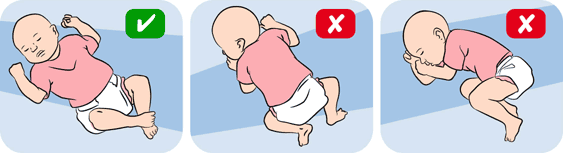
Numerous control studies in the late 1980s and early 1990s found that prone sleeping is an important risk factor for SIDS (Vennemann et al., 2009). Children accustomed to sleeping prone have an 18-fold increased risk of SIDS (Kinney and Thach, 2009). This led to recommendations to prevent prone sleeping (the “Back to Sleep” campaign), followed by a significant reduction in SIDS mortality in many countries (Vennemann et al., 2009). Current recommendations therefore require that children be placed on their backs during sleep (Figure 3), except for those rare infants with special health problems for whom a different sleep position is justified (Hunt and Hauck, 2006).
Figure: Recommended position and non-recommended sleep positions for infants (ABC Parenting, 2011, http://www.abc.net.au/parenting/parenting_in_pictures/safe_sleeping.htm)

Death during sleep can also result from a dangerous sleep environment that leads to fatal hanging or wedging. Soft bedding and soft surfaces, including pillows and blankets, sheepskin, and porous mattresses can lead to airway obstruction, suffocation, and overheating. Additionally, greater danger was found with prone position and soft sleeping surface (Mitchell et al., 2012). Prone sleeping and fluffy bedding cause increased risk of rebreathing already exhaled CO2, resulting in low oxygen levels and consequently death (Germaine, 2011).

It is recommended that children sleep in their own bed without a pillow (Vennemann et al., 2009).
Numerous studies have reported that infants who sleep in a separate room, away from caregivers, have an increased risk of SIDS (Mitchell et al., 2012). A large study (Blair et al., 1999) demonstrates a 10-fold greater risk of SIDS, as children who sleep separately from their caregivers more often cover themselves with bedding over their heads and sleep prone.
Most infants succumb to SIDS at approximately three months of age. This is the period when the infant begins to sleep better or sleeps for longer periods. During deeper sleep, infants are less responsive to alarms of falling blood oxygen levels. Research on sleep patterns of children who narrowly escaped SIDS showed they slept for longer periods and did not wake frequently at night. Normally, infants in the first months frequently transition from deep sleep to lighter, more active sleep and back during sleep. This is their defense mechanism, as light sleep stimulates breathing and heart rate and is especially important in children with less effective mechanisms for restoring breathing. Children who have difficulty waking are more exposed to the possibility of SIDS than those who wake more frequently. Breathing interruptions are most likely between 1:00 and 6:00 AM. The period when the risk of SIDS is greatest coincides with the period when infants significantly reduce periods of active (light) sleep, which occurs approximately between the second and third month of age. When they reach six months, the respiratory mechanism is much more mature and the possibility of SIDS decreases significantly. Therefore, infants are not ready for all-night sleep until their bodies mature enough that longer sleep periods are safe enough (Hleb Babič, 2003).
Bed-sharing or family bed is a term meaning family members sleeping in the same bed or on the same sleeping surface: one or both parents and at least one child (Dvojmoč Kotnik, 2012). This risk factor remains a controversial topic among healthcare workers and families. Possible benefits of bed-sharing are: more breastfeeding, greater bonding between child and parent, and fewer sleep problems. However, in addition to benefits, it was found that co-sleeping increases the risk of SIDS. Therefore, in 2005, the American Academy of Pediatrics (AAP) issued a statement discouraging bed-sharing (Adams et al., 2009).
Bed-sharing carries significantly greater risk for infants with lower birth weight, for infants whose mothers smoke or use illegal drugs and alcohol (Hunt and Hauck, 2006), if mothers take medications (antidepressants, pain medications), are ill, or overly tired (McGarvey et al., 2006). Recent studies have shown that bed-sharing was associated with increased risk of SIDS, even though mothers did not smoke and regularly breastfed the infant (Hunt and Hauck, 2006). This risk was especially increased in children younger than four months (Mitchell et al., 2012; Athanasakis, 2011; Adams et al., 2009; McGarvey et al., 2006). Bed-sharing is very dangerous, especially if siblings also sleep in the same bed where the infant sleeps, if parents sleep with the child on a sofa (Mitchell, 2010), or on any other soft surface. Risk increases with longer duration of bed-sharing at night (Hunt and Hauck, 2006); 50% of infants who died unexpectedly shared a bed with parents (McGarvey et al., 2006; Mitchell et al., 2012).
Therefore, the safest place for an infant to sleep is in the parents’ bedroom, but in their own crib (Hunt and Hauck, 2006).
Smoking
Smoking during pregnancy is associated with risk of pregnancy complications such as miscarriage, premature birth, placenta previa, placental abruption, and premature rupture of membranes (Deans, 2006). Research by Mitchell and Milerad (2006) demonstrated that smoking during pregnancy is also associated with SIDS.
Nicotine in cigarette smoke reduces blood flow to the child, and carbon monoxide reduces the amount of oxygen in the blood (Deans, 2006). An English study (Schneider et al., 2008) and a German study (Bajanowski et al., 2008) confirmed higher levels of nicotine and cotinine (a nicotine metabolite) in the hair of infants born to mothers who smoke. They also showed that some chemicals were detected in infants whose mothers denied smoking during pregnancy, indicating that passive smoking is also dangerous. Bajanowski et al. (2008) confirmed that cotinine values are not significantly higher in infants whose mothers smoke than in those where mothers are passive smokers, which could mean that transfer of nicotine and cotinine into breast milk was not an important factor for SIDS. Nevertheless, an infant born to a mother who smokes 20 or more cigarettes per day during pregnancy has 8 times more chance of SIDS than an infant of a non-smoking mother (Foundation for the Study of Infant Deaths, 2009). Smoking is currently the most important risk factor for SIDS that we can preventively influence. Smoking and exposure to tobacco smoke in the environment harmfully affect infant health: it increases the likelihood of stillbirth, low birth weight, premature birth, and respiratory infections. Increased risk of SIDS has been demonstrated in more than 60 studies related to smoking during pregnancy and also passive smoking. The risk of SIDS for infants of mothers who smoke during pregnancy is approximately 4 times greater than for non-smokers. It is estimated that one-third of SIDS deaths could be avoided if mothers avoided cigarette smoke during pregnancy (Mitchell et al., 2012). It is assumed that exposure of infants to tobacco smoke in Europe caused 24%–32% of SIDS (Boldo, 2010).
Alcohol and Drugs
Alcohol inhibits parental capabilities and can be a SIDS risk factor. It is generally known that alcohol affects judgment and impairs the ability to care for a child (Phillips et al., 2011). The possibility of SIDS increases 2–5 times in infants whose mothers used drugs (opiates), 6–8 times if mothers consumed alcohol (especially in the first 3 months of pregnancy), and 2–8 times if mothers consumed alcohol in the last 24 hours before SIDS (Athanasakis, 2011). The SIDS rate is abnormally high in children of mothers who consume alcohol (Phillips et al., 2011). Siblings of a child with fetal alcohol syndrome have a 10-fold greater chance of SIDS (Athanasakis, 2011; Burd et al., 2004). The author of this thesis did not find data in existing literature on whether fetal alcohol syndrome is a possible SIDS risk factor.
High risk is associated with sharing a sofa or any other sleeping surface with parents who have consumed alcohol or drugs. Parents should be warned never to sleep with an infant if they have consumed alcohol or drugs (Blair et al., 2009). Although parents are “programmed” to be aware of the child’s presence during sleep, even one beer before bed can reduce the ability of this awareness. Alcohol and drug use reduces responsiveness to the child’s needs, so parents should not sleep in the same bed after a night out (Felc, 2008a). A connection was found between alcohol consumption and consequent increase in SIDS at the end of the week and around New Year’s (Phillips et al., 2011).
Excessive coffee consumption also has an effect on SIDS. Consuming five cups of coffee per day (or more) has the same consequences for the fetus as tobacco (Delahaye, 2006), which the author discusses in detail in section 5.4.
During pregnancy and after birth, it is especially necessary to avoid illegal drugs (marijuana, heroin, cocaine, methadone, and amphetamines). Deans (2006) states that many studies have shown that drug use increases the chance of premature birth or birth of a child with low birth weight. Some drugs also cause problems in child development and behavior. Cocaine and crack are highly addictive drugs. Use of these two drugs during pregnancy increases the risk of premature placental abruption. Cocaine increases the possibility of congenital defects, neurological problems, seizures, developmental disorders, and SIDS.
Vaccines
Vaccines significantly and undoubtedly contribute to reducing disease and death from many infectious diseases. Infants are among the most vulnerable members of society and need to be protected from health hazards (McCormick, 2003). The first combination vaccine against diphtheria, tetanus, and pertussis was registered in the late 1940s. Since then, vaccine development has advanced greatly (Hoppenbrouwers, 2001).
The author found during reading and studying the literature that authors have different opinions regarding the effect of vaccines on the occurrence of SIDS. The fact that DTP (diphtheria, tetanus, pertussis) vaccination is associated with SIDS has been occasionally discussed in the last 20 years, but a series of studies has consistently rejected this claim. The coincidence of certain conditions (SIDS and febrile seizures) at the age when routine infant and child vaccination is performed does not prove a causal connection with the vaccine (Koren Jeverica and Glavnik, 2008). McCormick (2003) believes that childhood vaccinations do not cause SIDS. Vennemann et al. (2007) even state that children should be vaccinated according to AAP recommendations, as the connection between vaccination and SIDS has never been confirmed. Fleming et al. (2001) even claim that vaccination could have a protective effect against SIDS.
Children receive three basic doses of DTP at two, four, and six months of age, and 85% of all SIDS cases occur between one and six months of age, most at two to four months of age. Miller (2004) writes that pertussis vaccine can cause fever up to 41°C, pain, swelling, diarrhea, projectile vomiting, excessive drowsiness, piercing screaming (similar to the so-called encephalitic cry associated with central nervous system damage), inconsolable crying attacks, seizures, convulsions, collapse, shock, breathing difficulties, brain damage, and SIDS. In the three days after pertussis vaccination, seven times more infants die compared to those who were not vaccinated. In a scientific study (Scheibner, 1993 cited in Miller, 2004), they recorded before and after pertussis vaccination how many times the children’s breathing stopped and how many times they breathed abnormally shallowly. The results clearly showed that vaccination extremely increased the number of near-stops or complete stops of breathing (Miller, 2004). However, a recently published meta-analysis provides solid evidence that vaccination is even associated with lower risk of SIDS (Mitchell et al., 2012).
Based on the reviewed literature, the author of this thesis concludes that the data are contradictory and cannot determine whether infant vaccination can cause SIDS or even prevent it. It is important that parents or caregivers observe and monitor their child after vaccination and immediately notify the pediatrician of any pathological change (Maindonald, 2005).
Genetic Influences
There is no evidence of strong hereditary influences for SIDS. However, certain genetic changes have been observed in children with increased vulnerability to SIDS. Genetic changes may be in the form of common basic changes (polymorphism) that alter gene function, and rare base changes (mutations) that have very common harmful effects (American Academy of Pediatrics, 2011a).
A family that has lost a child to SIDS is at higher risk than other families, as many of the same genetic and environmental influences that serve as risk factors apply to subsequent children (Bacon et al., 2008). A woman whose infant has died from SIDS faces a greater risk of SIDS for another child, with the risk estimated to be up to five times higher than in the general infant population. The risk of infant death for women who have already lost an infant to SIDS has been estimated at around 8–9 per 1,000 births (Smith et al., 2005). Similarly, numerous studies have reported that boys are 30–50% more likely to be victims of SIDS (Athanasakis, 2011; Maindonald, 2005).
Genetic polymorphism of the serotonin transporter 5-hydroxytryptamine (5-HT) has been observed in children who developed SIDS. This gene affects autonomic nervous system functions (Athanasakis, 2011; American Academy of Pediatrics, 2011b). Serotonin is a widespread neurotransmitter that influences a broad range of autonomic functions, including breathing, blood circulation, and circadian rhythm (certain physiological, behavioral, and biochemical processes in the body occur in approximately 24-hour cycles, which is why they are called circadian cycles or rhythms). Genetic studies have identified several ways in which children who died from SIDS differ from healthy infants and those who died from other causes (Hunt and Hauck, 2006).
Heat Stress
Heat stress or overheating of an infant is a known risk factor for SIDS and is thought to be one of the mechanisms by which risk for SIDS may increase when an infant sleeps with parents, especially when the infant sleeps on the stomach (McGarvey et al., 2006). When an infant’s body temperature rises due to elevated sleeping environment temperature, heat, sweating, or excessive clothing, the likelihood of SIDS increases (Athanasakis, 2011). Similarly, stomach sleeping itself increases the risk of overheating, reduces heat loss, and raises the infant’s body temperature compared to infants who sleep on their backs. Recent data indicate that stomach sleeping alters autonomic control of blood circulation during sleep, particularly at 2 to 3 months of age, and may reduce brain oxygenation (American Academy of Pediatrics, 2011a). High ambient temperature (summer months), however, has not been associated with infant overheating and consequently with increased SIDS incidence (Scheers-Masters et al., 2004).
Demographic and Socioeconomic Factors
Although SIDS can affect children from all social backgrounds, lower socioeconomic status, younger maternal age (<20 years), lower maternal education, and single-parent families are factors consistently associated with increased risk (Hunt and Hauck, 2006; Maindonald, 2005). Since the “Back to Sleep” campaign, it has been known that the risk of death is closely linked to socioeconomic deprivation (Vennemann et al., 2007). In the United States, children such as American Indians, Alaska Natives, and African American infants are more susceptible to SIDS than white infants, Asian infants, and infants from the South Pacific. To some extent, these differences may be related to higher poverty rates and the presence of other harmful environmental factors. Despite the decline in SIDS across all social and racial groups following educational campaigns, recent trends show even greater social and racial disparities (Hunt and Hauck, 2006). Mathews et al. (2004) found in a large study that infants who did not live with their father were 50% more susceptible to SIDS compared to those who grew up with their father. Cohabitation of both parents with the infant enables dual supervision.
Infants with Additional Increased Risk
Children at particularly increased risk for SIDS are those who have experienced a life-threatening event, siblings of parents whose previous child died from SIDS, and premature infants (Hunt and Hauck, 2006).
Apparent Life-Threatening Event (ALTE) is defined as a sudden unexpected change in an infant that is frightening to parents or caregivers but does not lead to sudden death or permanent collapse (Hunt and Hauck, 2006). ALTE manifests with episodes of apnea associated with changes in skin color (cyanosis, pallor, erythema), changes in muscle tone, and breathlessness or choking (Adams et al., 2009). ALTE has been reported in 5–9% of children who died from SIDS (Hunt and Hauck, 2006). In the past, such infants were also called “near-miss SIDS,” but it was agreed in 1992 that this term should be completely abandoned because the term “death” should not be used in clinical diagnosis (Neubauer, 2011). Educational campaigns that reduce SIDS do not affect the rate of ALTE occurrence. Only one risk factor is common to both situations, and that is maternal smoking during pregnancy. Risk factors for ALTE (from least to most important) include a history of apnea, cyanosis or pallor, feeding difficulties, single parenthood, and previous infant death (Adams et al., 2009).
A preterm baby (prematurus) is a newborn born between 24 and 36 weeks of gestational age, inclusive. Compared to full-term babies, they differ in weight, size, and viability (Bregant, 2005). They are characterised by low birth weight, an immature face, thin, red skin, a lack of subcutaneous fat (subcutaneous fat begins to accumulate in the third trimester of pregnancy), sparse hair, pronounced lanugo, and reduced muscle tone. Preterm babies have difficulties due to the immaturity of organ systems (Germaine, 2011; Felc, 2008b) and are also at risk because of immature vital functions—especially lung function (too little surfactant), vulnerability of the brain’s blood vessels, immature liver enzymes, and the immune system (Felc, 2008b).
Siblings of women who had a preterm birth or gave birth to a baby who was too small for gestational age are also at risk (Smith et al., 2005). Babies born weighing 1,000–1,499 g have a 4 times higher likelihood of dying from SIDS, while babies born weighing 1,500–2,499 g have a 3 times higher likelihood of SIDS (Athanasakis, 2011).
Because all vital functions are less mature, preterm babies carry a higher risk of SIDS. In addition, they can quickly get used to sleeping on their stomachs, so they should be put to sleep on their backs as soon as they are medically stable or have sufficiently mature breathing control (after 32 weeks of gestational age) (American Academy of Pediatrics, 2011b). Parents who watch their babies in intensive care units sleeping on their stomachs have that as a model, and as a result there is a greater chance they will also put the baby to sleep on their stomach at home (Grazel et al., 2010; American Academy of Pediatrics, 2011a). Therefore, in this case, health education on SIDS prevention is even more important. All healthcare professionals should be familiar with the recommendations the author presents in the next chapter.
PREVENTING SIDS
There is convincing evidence showing that more than 90% of SIDS can be prevented by addressing environmental risk factors (Mitchell et al., 2012; Germaine, 2011). A dramatic decline in SIDS incidence began after 1992, when the AAP launched the “Back to Sleep” campaign (Cataletto, 2012). However, the frequency of sleep-related deaths, including suffocation, entrapment, and asphyxia, increased (Healthy children org, 2011).
Although it is not possible to precisely identify which babies will die from SIDS, it is possible to identify those at increased risk based on a combination of certain risk factors. Recognising high-risk factors in babies can provide a basis for strengthened, targeted educational interventions regarding recommendations for preventive measures and reducing the risk of SIDS. SIDS is a complex, multifactorial condition, and further research will continue to be needed to fully understand the important interactions between genetic and environmental risk factors. In the meantime, epidemiological evidence and resulting measures are based on studies that determine how we might contribute to reducing the incidence of SIDS. The challenge is raising awareness among people who care for babies in a culturally appropriate way, monitoring the development of SIDS, etc. (Hunt and Hauck, 2006).
American Academy of Pediatrics recommendations
AAP recommendations provide safe sleep guidelines for parents and are effective in preventing SIDS (Hitchcock, 2012). The American Academy of Pediatrics (2011b) introduced 18 safe sleep and SIDS-reduction measures, divided into three categories as follows:
- Level “A” recommendations
- Level “B” recommendations
- Level “C” recommendations
The recommendations by level are presented below.
Recommendations in category “A” are based on high-quality scientific evidence (consistent findings from at least two well-designed and methodologically sound studies or meta-analyses) (American Academy of Pediatrics, 2011a):
- the baby should lie on their back for every sleep and nap (at least until 1 year of age);
- the baby should sleep on a firm sleep surface;
- the baby should sleep in the parents’ room (but not in the same bed), as this reduces the chance of SIDS by as much as 50%;
- all soft objects and soft bedding should be removed from the crib;
- pregnant women should be regularly monitored by healthcare professionals during pregnancy;
- during pregnancy and after birth, women and the baby must avoid tobacco smoke;
- during pregnancy and after birth, alcohol and illicit drugs must be avoided;
- breastfeeding is recommended;
- parents should consider offering their child a pacifier before sleep and during sleep;
- overheating of the baby must be prevented;
- parents should not use cardiorespiratory monitors at home to prevent SIDS;
- expanding the national campaign to reduce SIDS risk places strong emphasis on a safe sleep environment and ways to reduce the risk of all sleep-related infant deaths, including SIDS, suffocation, and other accidental deaths; paediatricians, family doctors, and other primary healthcare providers must actively participate in this campaign.
The recommendations should be followed as much as possible to reduce the risk of SIDS.
Category “B recommendations” are based on limited or inconsistent scientific evidence. The available evidence is sufficient to make recommendations, but confidence in the research evidence is limited due to the quality of individual studies or inconsistent findings across studies (American Academy of Pediatrics, 2011a):
- children should be vaccinated according to AAP recommendations and the Centers for Disease Control and Prevention, as there is no evidence that vaccination increases the incidence of SIDS (Statton et al., 2003 cited in American Academy of Pediatrics, 2011b);
- commercial devices intended to reduce the risk of SIDS should be avoided (e.g., special mattresses, as there is no evidence they reduce the risk of SIDS);
- it is recommended that the baby, while awake and supervised, lies on their stomach, as this promotes motor development and prevents plagiocephaly (asymmetrical head deformity due to improperly fused cranial sutures).
The American Academy of Pediatrics (2011a) believes that educational SIDS campaigns should be funded and promoted as much as possible, and surveillance of SIDS aetiology should be improved. Therefore, they also added category “C” to the recommendations, described in the next chapter.
Recommendations in category “C” are based primarily on spreading prevention:
- healthcare professionals working in kindergartens and neonatal intensive care units should support recommendations to reduce the incidence of SIDS from birth onward;
- the media and manufacturers of children’s products must follow safe sleep guidelines in their messaging and advertising;
- continued research and monitoring of risk factors, causes, and pathophysiological mechanisms of SIDS and other sleep-related infant deaths have the ultimate goal of eliminating these deaths entirely.
In her book “Baby Sleep – Falling Asleep Without Crying”, Pantley (2003) also lists the following safety measures:
- The room where the baby sleeps should be comfortably warm: 18–22°C.
- No one should smoke near the baby, whether the baby is sleeping or not; young children exposed to smoke are at greater risk of dying from SIDS and are also more at risk of other health problems such as asthma.
- The baby should be dressed appropriately. If the bedroom is cool, it is better for the baby to be more warmly dressed than covered, so they do not get tangled in a blanket; if it is warm, the baby must not be overdressed to avoid overheating. A hat can contribute to overheating.
- The baby should wear comfortable sleepwear that must not be too large or too loose.
- Soft toys or pillows should never be left with the baby. If the baby is older than 4 months and can roll over, lift and move their head easily, a safe comforter (lovey) may be left with them—without buttons or parts the baby could tear off; without clothing, headwear, or other fabric pieces the baby could remove; firm and not floppy; small, and easy for the child to hold and grasp.
- There should be no night lights, lights, or electrical devices near the child’s sleeping area.
- The child should not be put to sleep near a window, blinds, cords, or curtains.
- A pacifier should never be attached to the baby with a cord, ribbon, or chain.
- All other ribbons and cords should be removed.
- The mattress must fit the bed; there must be no gaps around the mattress.
- Sheets in the bed must be tight so the baby cannot pull them loose and get tangled in them.
- Plastic mattress covers must not be used; also remove all plastic bags from the surroundings.
- Toys and other hanging items should not be hung above the baby’s bed.
- The baby’s bed or room must be far enough from other rooms that you can hear them; otherwise, a reliable audio (safety) monitor must be installed.
- A baby must never be hit or shaken.
- The baby’s environment should be clean.
- Pets must not have access to a sleeping baby.
- A baby must not be left unsupervised.
- Always follow all safety measures wherever the baby sleeps, even when away from home, in a car seat.
- If possible, the mother should breastfeed, as breast milk reduces the risk of certain diseases and infections, which can reduce the risk of SIDS and prevent other health problems.
- The mother should take care of her health and wellbeing.
Recommendations for a safe sleep environment for babies must be written and should follow the latest guidelines. The goal is for all healthcare professionals to be familiar with the recommendations and support them. All healthcare professionals must provide parents with consistent safe sleep recommendations and measures to reduce SIDS (Hitchcock, 2012).
Breastfeeding
There are many well-known benefits of breastfeeding, including a reduced risk of postneonatal mortality and morbidity worldwide. Breastfeeding is also beneficial in reducing the risk of SIDS (Mitchell et al., 2012; Hoyer et al., 2003). Breastfeeding protects children from respiratory and gastrointestinal infections, which increase the risk of SIDS (Maindonald, 2005). Breast milk promotes the development of the central nervous system, meaning that better-developed brains regulate a baby’s breathing more effectively. Breastfed babies sleep more quietly and calmly, and finally, many sleep together with their mothers, which means there are more factors around them that can rouse them when breathing pauses occur (Hleb Babič, 2003).
Breastfeeding protects against SIDS, and this effect is even stronger if the mother exclusively breastfeeds. The recommendation to breastfeed should be included in other recommendations for reducing the risk of SIDS, and breastfeeding should be encouraged because of its many benefits for the baby’s and mother’s health (Hauck, 2011).
Pacifier use
There is increasing evidence that using a pacifier during sleep wakes the baby more often and thus helps prevent apnoea (Hunt and Hauck, 2006). As early as 1979, researchers assumed that pacifier use during sleep could protect against SIDS. The mechanisms by which pacifier use might protect against SIDS are still unknown and not generally accepted. Some explanations are that a pacifier encourages the baby to breathe through the mouth if the nose is obstructed, and that it promotes the tongue resting forward, thereby reducing the risk of airway blockage by the tongue, or discourages the baby from sleeping on their stomach (Damato, 2007). There has also been debate about whether thumb-sucking reduces the risk of SIDS. However, a study in the Netherlands (L’Hoir et al., 1999) found no association between thumb-sucking and reduced SIDS risk.
Moon et al. (2012) state that pacifier use during sleep can reduce the risk of SIDS by 90%. It is not known whether the reduced risk is due to a direct effect of the pacifier or is related to the behaviour of children and parents (Hunt and Hauck, 2006). Many parents do not like giving their child a pacifier, but pacifier use has been shown to be a protective factor against SIDS. Some believe pacifier use is not recommended because it interferes with breastfeeding, so it is recommended to offer a pacifier once breastfeeding is well established (Kibel, 2010). Pacifier use should therefore be delayed until at least 1 month of age in breastfed babies (Hauck et al., 2005).
PARENT COUNSELLING
Healthcare professionals play a major role in teaching and counselling parents. They must warn parents about harmful environmental influences and explain, in the clearest possible way, how to best ensure the child’s safety. All parents should be advised that the baby should sleep on a firm surface and on their back, in a smoke-free environment; overheating should be prevented; they should use a sleep sack; the baby should sleep in the same room as the parents but in their own bed; mothers should breastfeed for at least one year; and, if possible, offer a pacifier before sleep. The last recommendation was added based on a meta-analysis that showed a 30% reduced risk of SIDS with pacifier use, without negative effects on breastfeeding success (Poets, 2012). Parents should be advised to avoid situations where they might fall asleep with the baby on a sofa. The safest place for a baby to sleep is in a suitable bed next to the parents’ bed (Blair et al., 2009).
Parents are often reluctant to place their babies on their backs mainly due to fear of choking or aspiration while lying down. Parents often misinterpret coughing or gagging, as this is usually a protective reflex against choking or aspiration. Studies (Byard, 2000; Malloy, 2002; Tablizo et al., 2007) in various countries did not find an increased incidence of choking when lying on the back. Another reason parents cite is the belief that the baby is uncomfortable or does not sleep well on their back. It is normal for a baby to wake frequently, and parents should not interpret this as poor sleep. Studies (Ariagno et al., 2006; Bhat et al., 2006; Kato et al., 2006) have shown that a baby is less likely to wake when sleeping on their back than when sleeping on their stomach. The ability to wake from sleep is an important protective physiological response to stressors during sleep (American Academy of Pediatrics, 2011a).
The Foundation for the Study of Infant Deaths (2009) advises parents:
- Mothers must stop smoking during pregnancy; the same applies to fathers. No one should smoke in the room where the baby stays.
- The baby should sleep on their back (not on their stomach or side).
- Make sure the baby is not too hot and that the baby’s head is not covered with a blanket during sleep.
- The baby should be placed with their feet at the foot of the bed to prevent them from wriggling under the blanket, or parents should dress the baby in a sleep sack.
- Parents should never fall asleep with the baby on a sofa or armchair.
- The safest place for a baby to sleep in the first 6 months is in a bassinet or in their own bed in the parents’ room.
- It is especially dangerous for a baby sleeping in the parents’ bed if the parents smoke (even if they do not smoke in the home), if the parents take medicines or drugs that have a sedative effect, if the parents are very tired, if the baby was born before 37 weeks, if the baby weighed less than 2.5 kg or more than 5.5 kg at birth, or if the baby is younger than 3 months.
- The baby should sleep with a pacifier (day and night), as this lowers the chance of SIDS.
- Mothers should breastfeed their children and establish breastfeeding before using a pacifier.
When the baby is awake and can be watched, it is recommended to place them on their stomach. This position helps develop strong shoulder and neck muscles, supports normal motor development, and prevents a flat head caused by lying on the back (Maindonald, 2005). If a baby is never placed on their stomach, deformational plagiocephaly can occur. This is flattening of the back of the head, affecting up to half of babies who sleep on their backs. After recommendations that back sleeping is safest, it has become even more common. To reduce the risk of skull deformity, the baby should be placed on their stomach for as much time as possible while awake and supervised (Adams, 2009).
Although it is known that much can be done to reduce the risk of SIDS, we must never create a sense of guilt in parents who have experienced this tragic event. SIDS is a major tragedy and is by no means completely predictable (Hleb Babič, 2003). Parents who have lost a child to SIDS are deeply affected and completely unprepared for the tragedy. Because a reliable cause of their child’s death is not found, they often feel excessively guilty. They are further affected by investigations by the police, social services, and other institutions. These parents should be offered psychological help and support from trained doctors and other healthcare professionals. Other parents whose baby died unexpectedly can also help (Berkow, 2000).
In Slovenia, the Solzice association has been operating since 2004. Its purpose is to help grieving parents and their families through the difficult period of coping with the loss of a child during pregnancy or shortly after birth, and to inform bereaved people about their rights following a tragic event. Solzice organises lectures for parents and relatives with the help of external experts from various fields (doctors, psychologists, sociologists), provides contact details for institutions that bereaved families and others can turn to, organises support groups for the bereaved, and proposes improvements to professional work in the field of supporting the bereaved (Levičnik, 2010).
Source: the author Barbara Meglič’s thesis (2013): Risk factors and prevention of sudden infant death syndrome, supervised by Dr Ana Polona Mivšek, BMid, Senior Lecturer.