First and foremost, your newborn needs happy parents who give them love. And you can already tick that off.
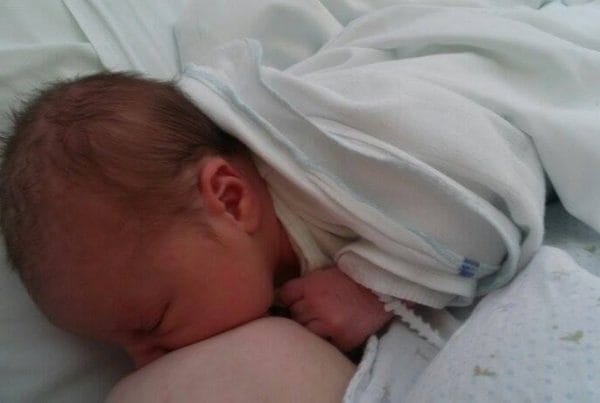
To start with, they need love, closeness, and warmth. So ask the midwife to place your baby naked on your bare chest for at least 1.5 hours after birth, so you can have that dedicated hour. During this dedicated hour, babies most often latch on to the breast too—and that’s the second thing they need: food. Looking for breastfeeding information during pregnancy will make you more confident and help breastfeeding get off to an easier start, so your baby will be well fed.
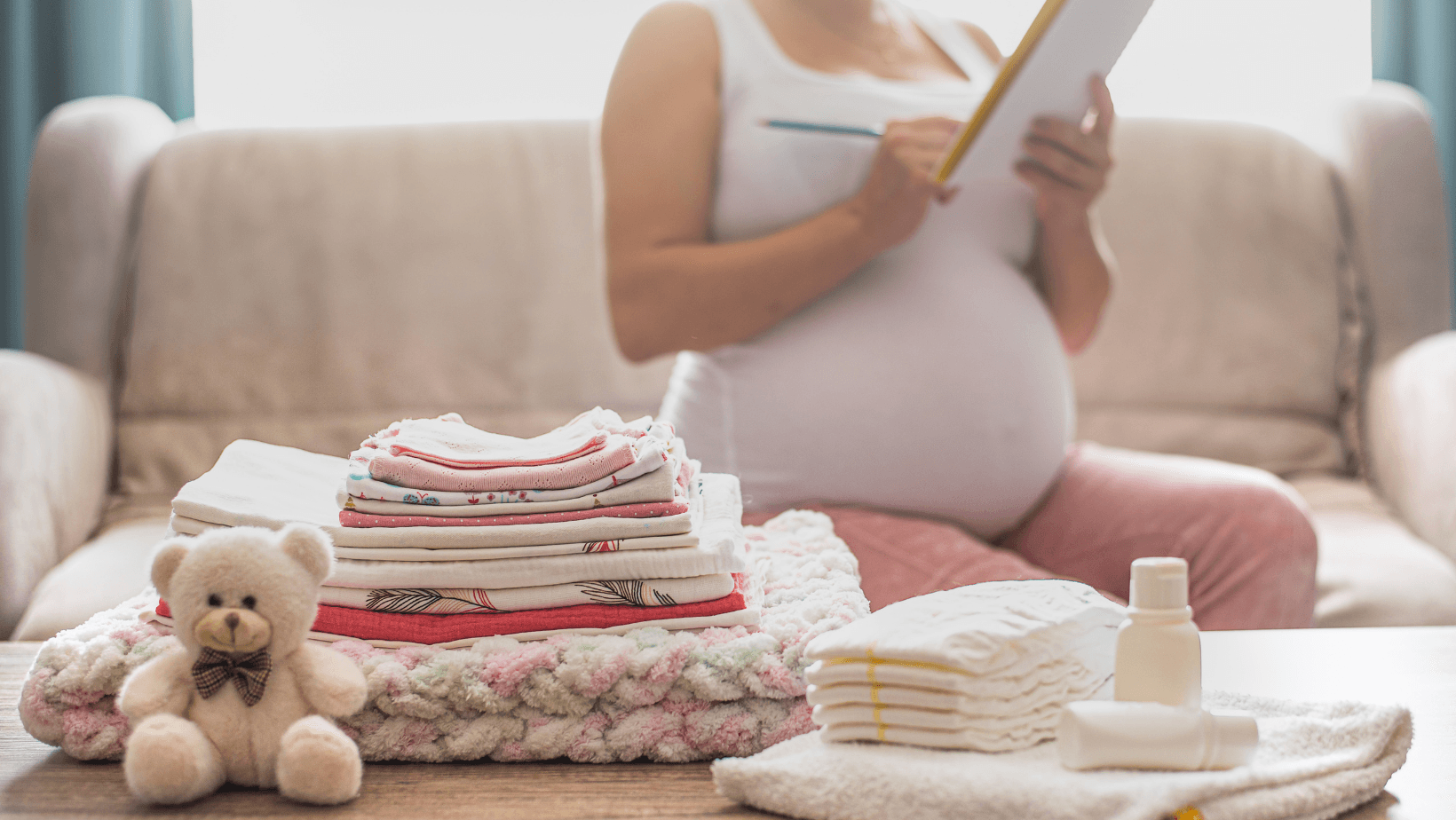
Even so, it’s recommended that you also get a few essentials for them. ☺
- You can never have enough cloth diapers (tetra diapers). At least 20 pcs are recommended. When buying them, we recommend choosing higher-quality diapers—woven as densely as possible. There are also smaller ones on the market now, which are more practical when you only need them for wiping around the mouth and little hands.
- Think about which diapers you’ll use for changing your baby—disposable or washable—and make sure you have the right number and size. Plan on changing your baby about every 3 hours, i.e., around 6 times a day. But at the beginning, don’t overdo it with quantities. Buy 1 pack of disposable diapers first to see if they suit your baby. Some providers also rent out washable diapers.
The question is also about clothing sizes. It’s recommended that you start by buying size 62. However, for leaving the maternity hospital and the first few days, mums still prefer to buy a set in size 50, or most often 56 (if it’s a bit too big, you can fold it up). How many?
- 10 bodysuits with long sleeves (because 5 won’t be enough) and
- 5 tops with long sleeves.
You can also use only bodysuits—then have more of them.
- 5 cotton footed pants.
- 5 sleepsuits.
- Pajamas (2 pcs).
To start with, more and more mums use bodysuits with and without feet that zip up, which makes handling the baby easier. With the ones that have a two-way zipper, you don’t need to undress the baby completely when changing a diaper.
Keep in mind that babies outgrow their first clothes quickly, so there’s no point in having a huge stockpile. It’s great if you can get any of these items so you don’t have to buy them. Baby clothes should be made from natural materials—cotton is best, as you can boil-wash and iron it, or tumble-dry it. For laundry, use the most neutral detergents possible, and instead of fabric softener you can use white vinegar. You can also make liquid laundry detergent yourself: Recipe for homemade laundry detergent.
- You’ll also need a few pairs of socks or booties.
- 2 cotton hats (sizes 56 and 62); in the summer months you’ll also need a
- sun hat.
- At least 1 set of a cardigan and thicker pants (and a hat) for cold days, and slightly thinner ones for warm days.
- Instead of a bib, you can use a tetra diaper when feeding a newborn.
- Swaddling diapers are still recommended, but you don’t need them if your baby won’t need wide swaddling. Others like to use them because it gives them “something to hold on to.” Some use them because they don’t have bodysuits and the swaddle “keeps” the tops in place so they don’t ride up too much. They’re also most commonly used in maternity hospitals for this purpose.
- Some mittens can also be useful, because newborns often scratch their face, since you usually only start trimming nails after three weeks. But don’t use them unless necessary, because babies explore and feel with their hands. It’s better to trim your baby’s nails. You can use a baby nail file (code mojababica10).
- Blanket (wool/fleece on colder days and cotton for warmer days).
Cold hands aren’t always a sign that your baby is cold. Check whether your baby is cold by feeling if their chest and/or the back of their neck is warm.
For basic hygiene, we already mentioned diapers. Wash your baby with clean water and then consider:
- whether you’ll use disposable cotton wipes or reusable cotton wipes (tetra diapers, smaller pieces with finished edges).
If you still decide to use wet wipes (use them only when you’re out and about,…), always DRY the bottom WELL to prevent fungal growth. They should not contain alcohol or oils.
- A larger towel. If you can, you can buy a baby towel with a hood in one corner.
- For those with dry skin, natural oil is recommended for skin care (e.g., olive, almond). I’m talking about 2–3 drops on areas where the skin is dry (e.g., tummy, legs). Use oil regularly to care for skin folds (top of the foot, behind the knees, groin, armpits, elbow, neck, and behind the ears).
- Cooling ointment for the bottom—apply only around the anus if it’s inflamed. Be careful not to buy ointments with essential oils, which can irritate a baby’s skin. If needed, you can later buy zinc ointment.
- Even if your baby doesn’t have much hair, brush gently and massage the scalp with a hairbrush, ideally with natural bristles. This also helps prevent cradle cap. If your baby has longer hair, you’ll also need a comb.
If cradle cap develops, apply oil (or a very rich cream). Then put a cotton hat on your baby’s head and leave it overnight. In the morning, wash and comb the scalp. Repeat until the cradle cap disappears. There is also a cradle cap shampoo on the market.
- Trim nails weekly, or as needed, with baby scissors (they have a rounded tip) after about week 3, when the fingertips firm up. For some newborns, you’ll need to trim nails even before 3 weeks. Cut fingernails in a semicircle and toenails straight across. You can use a baby nail file (code mojababica10).
- Don’t forget to clean the mouth—you can use the same gauze pads as for cleaning the belly button.
Put the gauze pad on your finger, moisten it, and clean the gums, palate, tongue—so the whole mouth cavity—to remove buildup. When the first tooth comes in, start using a toothbrush.
- Use cotton wool to wash the eyes. One for each eye! You can also wash the rest of the face with cotton wool.
- If you don’t have a baby bath but you do have a large sink, you can bathe your baby there too (once the belly button has healed). For the bath, a stand is also recommended, or place the bath on a safe surface where it can’t slip. You’ll also need
- neutral (bar) soap.
- 70% alcohol (for disinfecting equipment).
- For care on a changing surface (changing table, washing machine, counter, floor…), you’ll also need a container of water (if you won’t have running water nearby within reach) and a container over which you’ll pour water onto the wipes and place used wipes.
It’s not recommended to soak wipes, especially if the baby has pooped and you first need to do anogenital care. You might get stool on your fingers, then transfer it into the water and later to the eyes or the whole body.
- You’ll also need a thermometer to measure body temperature, and a
- water thermometer, which isn’t essential. If you don’t have a water thermometer, check the water temperature (37°C) with the inside of your forearm. The water should be at a temperature you “don’t feel.”
Where you’ll care for your baby, make sure the room is warm (26°C) and draft-free. Still, air out rooms regularly several times a day. The temperature in living areas should be between 20–22°C, and the bedroom can be cooler (18–20°C).
Before caring for your baby, prepare EVERYTHING in advance. Never leave your baby alone on an elevated surface (changing table, bed, sofa…). Even with a healthy newborn, we try to handle them correctly (handling).
Don’t forget your own hygiene. Prepare lanolin nipple ointment, and for the first week also cooling nipple compresses; you may also want breast pads for leaking milk—change them regularly to prevent a fungal infection—mesh underwear, and pads made from natural materials, without plastic mesh.
The belly button also needs careful care in the first weeks, for which you’ll need:
- Sterile saline solution (10 ml) and
- non-woven sterile gauze pads (best if packed in sets of 5).
There’s no need to buy sterile belly button care kits. Saline solution and gauze pads are completely enough. You’ll moisten 3 (or more if the belly button is dirtier), and use 2 to dry the belly button. So moisten the gauze pads, not the belly button, because excessive soaking slows healing. Be careful that until the belly button has healed, you don’t cover it with disposable diapers, so it can air out and dry. Fold the diaper outward, below the belly button. Never use cotton swabs or cotton wool in general on the belly button. Also, don’t use cotton wool to wash intimate areas, because small pieces can remain and cause inflammation. Clean the belly button once a day, unless the baby has peed or pooped over the stump or it’s visibly dirty—then, of course, more often. After 2–3 weeks, when the belly button is completely healed, you can start bathing the baby. For the first bath, your community nurse/midwife will help you.
Clean your baby’s nose every day as well. Do this with saline solution and cotton wool, which you roll into a little wick. Tear the cotton wool into long pieces, moisten them with saline solution, and roll them between your fingers into a pointed shape that you can gently rotate in the nostril. Before that, put a drop of saline solution into the nostrils to soften the contents. Sometimes this alone irritates them enough that they sneeze and clear the nasal passages. This will help keep the nose clear and moist, making breathing easier. Use saline solution also if your baby has an eye infection. But use a separate cotton wool pad for each eye!
Saline solution (code mojababica10) will also come in handy for cleaning the nose. Over time, you’ll also need an aspirator (code mojababica10). A portable one is very practical—you can carry it around the apartment, and you might even keep it by the changing area. If your baby has a blocked nose, you can simply move it to the bedside.
Even before the first teeth come in, you can regularly use a silicone toothbrush (code mojababica10) to get your baby used to the feeling of brushing.
For sleep, it’s recommended:
- A crib with a firm mattress (for the first months you can use a cradle or bassinet).
- Cotton duvet covers (2) and
- a fitted sheet (3).
- A blanket for covering, which shouldn’t be too heavy.
- Some parents use sleeping bags. In that case, do NOT cover the baby additionally with a blanket, and make sure there’s enough room for their legs to move.
A newborn doesn’t need a pillow. You can place a folded cotton diaper under their head (now you know why you need at least 20 ☺). Always lay your baby down on the lower side of the crib (on their back), so they can’t wriggle under the blanket. And don’t forget: a baby has a different sleep rhythm than an adult! They wake up and feed at night too, several times. Some mums decide to “burrito” their babies in the first month, even though it’s not recommended. If you swaddle your baby tightly, be careful. The legs must be in a natural position (hip flexion). Do NOT straighten the legs (hip extension). Learn more about sleep here: About the newborn.
I recommend borrowing as many things as possible, if you can, and saving money that way. Many parents also get a lot of things. Don’t buy pacifiers, bottles, breastfeeding attachments (nipple shields), bottle warmers, pumps, sterilizers in advance. Prepare for breastfeeding. If breastfeeding problems arise, first contact the staff at the maternity hospital; at home, your community nurse/midwife will help you, or later seek professional support from counselors at www.dojenje.org or dojenje.net . You also don’t need to buy various loungers and baby swings. Instead, we recommend that around 3 months of age you invest in a good (thicker) floor mat, where you’ll spend most of your time with your baby. Also, it’s better to borrow baby carriers first to see if your baby likes it, and only then carefully choose an ergonomic carrier.
Even during pregnancy, you can call to choose a pediatrician and book an appointment, as many pediatricians are already fully booked.
What should I prepare for leaving the maternity hospital?
To carry your baby safely out of the maternity hospital, you’ll need:
- A 0+ car seat (infant carrier)
- At least 3 cotton (tetra) diapers (used to place under the newborn to make transport more comfortable).
- Just in case, a disposable diaper (or a washable diaper).
- Most mums choose to dress the baby in a long-sleeved bodysuit; others use long-sleeved cotton tops. If you use a top, you’ll also need:
- A swaddling diaper.
- Cotton footed pants (tights).
- Booties or socks.
- Pants.
- A blanket for covering.
When choosing a car seat (infant carrier) for a newborn, choose a Group 0+ seat, intended for babies from birth up to 13 kg. In practice, that’s up to around the 8th or 10. 9th month. The seat must meet the standard (currently ECE 44/04 and ECE R129) and must have an orange label stating compliance details. Use the infant carrier only for transport and not for more than 2 hours at a time. Install it in the car rear-facing and make sure it’s fitted correctly. For more information, visit the Slovenian Traffic Safety Agency website: Red is always seatbelt fastened
In nice weather, go for a walk too. Keep an eye on PM10 particle levels and catch some sunshine. Still, give your baby vitamin D drops, because direct sun exposure to get enough vitamin D can be dangerous due to the risk of sunburn. For the first 14 days, we still recommend using the time to rest, cuddle, and get used to each other. If you feel well, you can still go for a short walk. In summer, go for early or late walks; in winter, the opposite—when it’s warmest during the day. Provide shade in the stroller with a sunshade or umbrella. Never cover the stroller with a diaper, especially on summer days, as you can overheat the baby. In winter, you’ll also need an outer winter layer: a snowsuit with mittens and booties, and a warm hat.
Also read: How I bought a baby stroller and almost lost my mind.
I recommend buying the online lecture About the Newborn – Moja Babica.