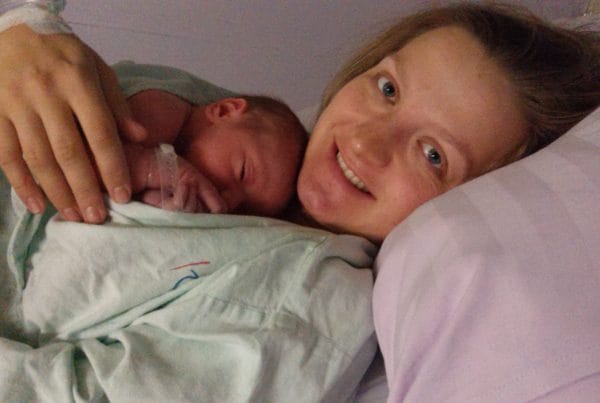
Bonding is a special connection between parents and their child that draws parents to their infant like a magnet. For the mother, it begins during pregnancy with the feeling that the baby is part of her. Bonding strengthens after birth, and the mother feels complete only when she is with her child. If the child is not nearby, she feels as if a part of her is missing. This type of bonding does not disappear overnight, nor is it woven together in an hour of togetherness after birth. It is like weaving, which develops gradually as mother and child respond to each other (Sears and Sears, 2008). Every newborn’s fundamental need is to establish a strong and deep bond with adults, as both their survival and the direction, depth, breadth, and security of their development depend on this bond (Ham and Tronick, 2009).
In Slovenia and around the world, the tradition of separating children and mothers after cesarean birth is still very widespread. Operative completion of birth interrupts the usual birth experience and is often reflected in the spatial, visual, and auditory separation of mother and newborn, due to hospital policies and practices that are not consistent with the family-centered care model (Nolan and Lawrence, 2009). Studies conducted on many mammals have shown that cohabitation of mother and newborn in the first hours after birth promotes maternal behavior and strongly influences the later bond between mother and child (Bystrova and Ivanova, 2009). Promoting attachment is one of the most important interventions in midwifery care, through which healthcare professionals aim to improve the quality of bonding between child and parents. This intervention should promote well-being, satisfaction, and overall health of the mother, child, and entire family (Urbančič, 2002).
CESAREAN BIRTH
Pajntar (2004a) defines cesarean section as the delivery of the fetus through an incision in the abdominal wall (laparotomy) and an incision in the uterine wall (hysterotomy). Indications for completing birth by cesarean section vary. They are mainly divided into those on the fetal side, on the maternal side, and those in the interest of both mother and fetus. Thomas and Paranjothy (2001) cite the most common reasons for cesarean section as: fetal distress (22%), failure to progress in labor (20%), and breech presentation (11%). More than 50% of cesarean sections are urgent. An urgent cesarean section is performed when various indications arise during labor that threaten the life of the child or mother (Pajntar, 2004a). The most common reasons for urgent cesarean section are antepartum hemorrhage, umbilical cord prolapse, uterine rupture, eclampsia, cephalopelvic disproportion, and failure to progress in the first or second stage of labor (Hamilton, 2009). NICE (2004) lists other indications such as breech or footling presentation, twin pregnancy, HIV infection, active genital herpes infection during pregnancy, and placenta previa. Nevertheless, Pajntar (2004a) argues that these indications are strongly influenced by different positions of individual maternity hospitals and individual healthcare professionals.
With the development of surgical technique and anesthesia, cesarean section has become the elective method for completing pregnancy in many cases. For the anesthesiologist, cesarean section is a procedure in which optimal selection of anesthetic technique and choice of agents are particularly important. The choice of type of anesthesia depends on the condition of the woman in labor, the reason for the operation, the degree of urgency, the woman’s wishes, and the anesthesiologist. We must be aware that there is no ideal anesthetic technique or anesthetic for cesarean section. We can choose between regional and general anesthesia (Zabavnik, 2003). It is recommended that regional anesthesia be used for cesarean section, as the cause of all maternal deaths due to anesthesia in Great Britain is general anesthesia (Lewis and Drife, 2004).
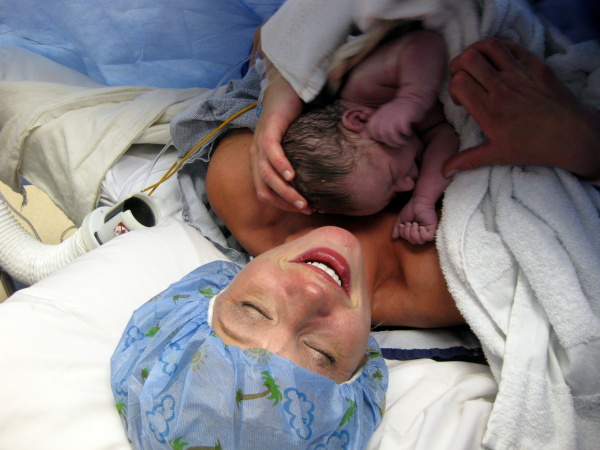
Regional or epidural anesthesia is the most suitable form of anesthesia during cesarean section, as this type of anesthesia has much less danger than general anesthesia, and in addition, the mother is awake during the operation and witnesses the birth of her child. This form of anesthesia also enables direct skin-to-skin contact between mother and newborn immediately after birth (Zabavnik, 2003), which increases the mother’s attention to the child, consequently raising her pain threshold, reducing feelings of anxiety, and making women more vitally stable, so there is less possibility of complications during the procedure itself and immediately after it (Phillips, 2013). Nevertheless, it must be emphasized that in some cases the use of general anesthesia is still appropriate. This form of anesthesia should be used primarily in emergency situations: in severe fetal distress and blood clotting disorders in the mother (Murphy et al., 2006).
Post-operative care for women after cesarean section differs significantly from care for patients after major abdominal surgery. Usual post-operative treatment includes strict restrictions on the recovering patient’s activities. In the case of recovery after cesarean section, however, the woman is not expected to rest and is even required to put all her strength into actively caring for her newborn (Mander, 2007). After cesarean section, mothers and children need a lot of additional support and time to begin breastfeeding. Before using any form of pharmacological analgesia, mothers must be informed about possible adverse effects that analgesia presents on the bonding and breastfeeding process (Bratanič et al., 2010).
The bonding process after cesarean section
Very often, a difficult and long labor affects the bonding contact between mother and newborn. Sometimes mutual attachment is hindered after cesarean section, whether it was planned or the result of complications during birth (Horvat Kuhar, 2010). Cesarean birth interrupts the usual birth experience and is often reflected in the spatial, visual, and auditory separation of mother and newborn, due to hospital policies and practices that are not consistent with the family-centered care model (Nolan and Lawrence, 2009). Experts mention negative effects on mother-child contact: after cesarean section, it should be more difficult to establish rapport due to post-operative pain, problems arise with breastfeeding, which can cause distress in mothers who want to breastfeed (Drglin, 2003).
Newborns born by cesarean section spend the first three hours after birth in the delivery room, together with the father, if he is present. The father’s presence during this time is very important for the child, as it has been proven that children who are separated from their mother in the first hours after birth and establish contact with their father cry less and are calmer (Erlandsson and Dsilna, 2007). After three hours, newborns are in most cases transferred to the “station.” This is a space where healthcare staff washes, observes, feeds, and cares for newborns while the mother recovers in the intensive care unit (Drglin, 2003). In Slovenia, women usually stay in the maternity hospital for three days, after cesarean section about five days (Zajec, 2013).
Cesarean section can be an extremely painful experience for a woman, often associated with a feeling of lack of control over her birth and greatly reduced self-confidence. That is why it is understandable that some women experience their encounter with cesarean section as severe psychological trauma (Reynolds, 1997).
Separation of mother and child after cesarean birth
At the beginning of the 21st century, women who became mothers were immediately separated from their children after birth, who were fed with milk substitutes, sweetened water, or teas for a day or more. Mothers were taught that their children could not see for several days after birth and that they would smile for the first time only after a few months, which could be used as examples of the operation of prevailing theories about child development and care. An almost universal policy of separating mother and newborn was adopted (Drglin, 2003).
Gartner et al. (2005) recommend that skin-to-skin contact between mother and healthy, full-term newborn be performed immediately after birth and warn that separation of mother and child after birth should be avoided as much as possible. WHO and UNICEF (2009) recommend that skin-to-skin contact between mother and child after cesarean section be performed within 30 minutes of birth. Berg and Hungova (2011) found in their research that the first skin-to-skin contact between mother and child after cesarean section is enabled in 20% within ninety minutes of birth, while in 40% contact between them is enabled only about four hours after birth. Oblasser and Ebner (2008) find that just under half of women see their child immediately after cesarean section. Due to medical procedures after cesarean section, skin-to-skin contact between mother and child is delayed for several hours. Precisely because of the separation of mother and child after cesarean section, more than half of women later have difficulties in the bonding process. Mothers who give birth by cesarean section have a less pronounced relationship with their newborn and develop positive feelings toward the child less well immediately after birth (Duhn and Ilkuta, 2010).
Separation of child and mother has numerous negative effects. Bystrova and colleagues (2009) found in their study that separation of mother and newborn in the first hours or days after birth inhibits the expression of maternal instinct. Fernandez and his colleagues (2012) warn of increased feelings of fear and severe stress in the child, the consequences of which are also evident a year after birth. When contact with the parent is interrupted, the child experiences intense stress and wants to call the parent (crying, actively seeking the parent), and when the parent returns to the child, the child calms down. Bowlby (2002) thus finds that crying and actively seeking the caregiver is the child’s natural reaction to the experience of separation from the primary object that provides the child with support, protection, and care. In the event that the caregiver is not available to the child and does not respond to their calls for emotional and physical closeness, the child experiences intense anxiety, their behavior is inhibited, sadness and despair can escalate into experiencing depression. Frequent, if not constant, physical contact of the child with the mother, father, or siblings reduces stress in the child. When the child does not receive physical contact with the caregiver or affection, the level of oxytocin in the child’s body decreases, while the value of the stress hormone cortisol increases (Palmer, 2002). Despite the fact that cohabitation of child and mother has numerous advantages, excessive emphasis on bonding at birth can cause unnecessary worries for parents who are separated from their child after birth for various reasons. If mother and child are together immediately after birth, they can indeed build a relationship more easily, but this can also be compensated for in other ways: through later bonding and bonding of the child with the father (Sears and Sears, 2008).
Skin-to-skin contact between mother and child after cesarean section
All parents and newborns have the right to close contact from birth onward. Closeness between mother and child should be encouraged in all circumstances, including the time after cesarean section or after other medical interventions that happen to mother and child (Drglin, 2003). Mother and newborn are most often deprived of direct skin-to-skin contact immediately after cesarean birth, as the child is immediately placed in a heated crib away from the mother after birth, where they are cared for, and then only briefly introduced to the parents. Several hours can pass between the mother and child’s next contact (Dekker, 2012).
Thermoregulation
Despite the known benefits of early skin-to-skin contact between mother and child after cesarean section, there is still a belief among healthcare staff that the likelihood of mild hypothermia in newborns born by cesarean section is much greater than in newborns after vaginal birth. Therefore, Gouchon and colleagues (2010) investigated the possibility of mild hypothermia in children born by cesarean section in their experimental study. They included 34 pairs of mothers with children in the study and divided them into two groups: pairs in the first group were allowed immediate skin-to-skin contact (the naked child was placed on the mother’s chest and covered with a warm blanket), while pairs in the second group were separated until the mother was discharged from the operating room, and the child was meanwhile dressed and placed in a crib. By measuring body temperature in children of both groups at thirty-minute intervals, they found that the measured body temperature values in both groups were almost identical: after thirty minutes 36.1°C in both groups, and after two hours 36.2°C in the group that was allowed immediate skin-to-skin contact and 36.4°C in the separated group. They found that children born by cesarean section who are allowed skin-to-skin contact with their mother in the first hour after birth are not at risk of hypothermia and that separating mother and child to prevent hypothermia is pointless.
Effect of anesthesia
The type of anesthesia for completing birth by cesarean section affects skin-to-skin contact between mother and her child. Mainly two types of anesthesia are used in practice: general and regional (Zabavnik, 2003). General anesthesia prevents the mother from having immediate contact with her newborn, as during the procedure itself it causes unconsciousness, analgesia, and muscle relaxation. Awakening and awareness after the procedure is longer, mothers are more tired, and may also feel disappointment because they missed the birth of the child. From the perspective of ensuring safety, enabling skin-to-skin contact between mother and child immediately after cesarean section is somewhat more difficult due to the effect of anesthesia, but not impossible. In some European countries and in the USA, regional or regional anesthesia is therefore mainly used for cesarean section, as it is very important for women to consciously witness the birth of their child and to be able to hold them immediately after birth, cuddle them, or even put them to the breast. This method of completing birth by cesarean section is therefore much more favorable to mothers and children (Ivanuša and Železnik, 2000).
Skin-to-skin contact between mother and child in the earliest period of an individual’s development has proven to be an important indicator not only of the child’s adjustment, personality predispositions, and formation of abilities, but also represents a prototype of the child’s attachment of interpersonal relationships with significant others later in life (Bowlby, 1975, cited in Jurič, 2009). Therefore, for actively promoting bonding, the choice of appropriate type of anesthesia is crucial. Regional anesthesia strengthens the bond between mother and child, promotes lactation and breastfeeding, and has a positive effect on the mother’s mental health after birth.
Lactation and breastfeeding after cesarean section
Praper (1995) says that breastfeeding is an indicator of the quality of attachment and symbiosis. The act of feeding is the first interaction between the child’s demands and the mother’s willingness to satisfy them—between taking and giving (Winnicot, 1991). The way a child is fed can predict the development of attachment behavior. The development of such behavior develops independently of the food itself and depends on the contact that occurs in the process. The child wants more than orderly feeding; they want to be fed by someone who enjoys it (Bowlby, 2000). This feeling, which usually comes naturally, can be disrupted by the mother’s worries (Winnicott, 1991).
Operative procedures during and immediately after birth almost inevitably prolong the time from birth to first feeding, possibly to well over the recommended 60 minutes, as separation of mother and newborn is inevitable, and it is necessary to wait for residual or unwanted effects of anesthetics to subside in one or both after the procedure (Novak Supe, 2007). Berg and Hungova (2011) found in their research that all newborns whose contact with their mother was postponed to a later time received milk substitute once during their stay in the maternity hospital. Mander (2007) states that due to the separation of mother and child and other stressful factors that accompany cesarean section, a relatively large number of women after operative completion of birth show willingness to breastfeed, but later more often decide not to breastfeed their child.
Feeding the child in the first hour after birth, which lasts as long as the child wants, skin-to-skin contact of the child with the mother, and reducing or even eliminating unnecessary separation of mother and child after cesarean section are key factors that contribute to breastfeeding success (Miesnik and Reale, 2007).
Separation of mother and child after cesarean section negatively affects breastfeeding success and consequently, due to expressed negative feelings of loss, disappointment, despair, helplessness, and sadness, increases the likelihood of postpartum mental disorders.
Various degrees and types of postpartum mental disorders can occur in the mother after cesarean birth, so the author presents their characteristics below.
Post-traumatic stress disorder
A major, if not the greatest, life turning point for every parent is certainly the birth of a child, as it requires a lot of adjustment and presents a challenge—not only on a physical level, but especially on a psychological and spiritual level (Skočir, 2005). Estimates of post-traumatic stress disorder after birth, sometimes also called birth trauma, are quite inconsistent. It is assumed that we could be talking about five percent of women who experience post-traumatic stress after birth, which can also be a predictor of postpartum depression. Current data show that the incidence of post-traumatic stress disorder ranges between 1.5-6% (Juckelevics, 2008). Problems can appear immediately after birth or only a few months later if the woman does not receive appropriate help. Post-traumatic stress disorder after birth is characterized by re-experiencing parts of the birth, nightmares, anxiety, severe fear, excessive concern for oneself or/and the child, excessive submissiveness and a feeling of severe vulnerability, crying attacks, anger, emotional numbness, a feeling of loss, lack of trust in oneself and in maternal abilities, and difficulties bonding with the child (Drglin, 2009).
Many mothers recovering from cesarean section feel disappointed, as they feel unable to carry out all the plans they had planned upon returning home with their child. When cesarean section is performed under general anesthesia, the mother does not witness the birth of her child, which some women experience as a loss. Some feel fear, disappointment, anger, or failure, which is especially pronounced in women who were preparing for active birth and the cesarean section was performed unexpectedly (Drglin, 2003). Women experience cesarean birth, especially urgent cesarean section, as a traumatic event (Tham et al., 2010). Ryding et al. (1997) included 25 women after urgent cesarean section in their research. As many as 19 women (76%) described their birth experience as traumatic, and 33% of women later showed signs of post-traumatic stress disorder. The possibility of postpartum mental disorders therefore increases in women after cesarean section (Bergink and Kushner, 2014).
Postpartum blues
Postpartum blues or “baby blues” is the most common and mildest form of postpartum mental disorders (Grussu and Quatraro, 2012). It appears a few days after birth and lasts about a week or just a few hours (Boath et al., 2006), then disappears on its own (Markovič and Štemberger Kolnik, 2012). This distress involves symptoms of milder depressive symptomatology that remind some of the mood before menstruation: inability to concentrate, sensitivity, irritability, sudden crying, tearfulness, confusion, uncertainty, poor sleep, fatigue after sleep, lack of energy and will, and worry. The disorder usually passes when hormonal balance is re-established, so we can assume that a woman can overcome postpartum blues with her own strength, without external help (Ličina and Radovanovič, 1995). Raphael Leff (2001) even states that postpartum blues is a physiological psychological reaction of the mother in the period after the child’s birth.
Postpartum depression
Čebašek Travnik (2006) says that depression is a mental disorder that can affect anyone regardless of social status, gender, age, or education. She states that the occurrence of depression is the result of altered brain function, which is brought about by a combination of genetic, personality, and environmental factors. The disease affects both physical health and well-being as well as changes in human thinking, feeling, and behavior. Rogan and colleagues (2013) emphasize that depression does not only affect the individual, but the entire family.
Metha and colleagues (2014) state that postpartum depression affects approximately 13% of women after birth, while Goker and colleagues (2012) emphasize that women who give birth by cesarean section, especially urgent cesarean section, have six times greater possibility of postpartum depression. Postpartum depression usually appears a month or two after birth, possibly earlier or later in the first year after birth. Symptoms of postpartum depression appear on a physical and emotional-mental level. Typical symptoms that appear are feelings of guilt, irritability, anxiety, social isolation, apathy, and listlessness (Bergink and Kushner, 2014). Symptoms of postpartum depression can also manifest in the relationship with the newborn and partner. Ambivalence, additional fear, shame and bad conscience, excessive concern for the child’s and partner’s health, feelings of incompetence and inability to cope with daily activities, and self-blame can be observed. Aggression toward the child and/or partner and the associated justified fear of losing self-control may also appear (Horvat Kuhar, 2010).
Postpartum psychosis
Postpartum psychosis is the most serious form of postpartum mental disorders that can affect a mother after birth (Agnew, 1999, cited in Skočir, 2005). Postpartum psychosis is most often an advanced state of postpartum depression, where immediate hospitalization in a psychiatric institution is necessary, as such a health condition can threaten both the mother’s life and her child’s (Bergink and Kushner, 2014).
Symptoms, which most often appear in the first two weeks after birth, are much more severe. The woman experiences completely distorted reality, delusions, hallucinations or delirium, confusion, indistinct and incomprehensible speech, and unreasonable reactions to stimuli from the environment appear. Suicidal thoughts and thoughts of infanticide are also not excluded. In this state, mothers are certainly not able to care for themselves and the child (Douchet et al., 2011).
Postpartum psychosis is experienced by one in a thousand mothers (Bergink and Kushner, 2014). For Slovenia, such a percentage would mean 18 to 36 women per year (Drglin, 2003). Psychosis may already be present in the woman, and there is a 25-50% probability that psychosis will recur in the next birth (Bergink and Kushner, 2014).
The mother’s mental health marks not only her child, but the entire functioning of the family system. The father also goes through different emotional periods, as he too is called to discover his male identity anew. He often experiences psychological stress in the process, so his emotional world should not be underestimated (Ušaj, 2009).
The author presents and describes the father’s feelings after the child’s birth below.
Father’s feelings after the child’s birth
Postpartum depression is a phenomenon that some men also face after the birth of a child. New values begin to form and strengthen in the father after birth, especially from the perspective of greater responsibility, feelings of financial concern, and feelings of attachment to the family and the consequent feeling of loss of freedom. Hart et al. (1997) say that these feelings can be the reason for postpartum depression in men. The main trigger for the onset of postpartum depression in the father is primarily the feeling of rejection by the partner, who devotes more time to the child after birth (Marković and Štemberger Kolnik, 2012). Ušaj (2009) also highlights the occurrence of feelings of jealousy toward the newborn, behind which may hide a painful memory of one’s own childhood, in which they were not cared for as their child is now. Čebašek Travnik (2006) states that, as with mothers, typical symptoms also appear in fathers, such as: irritability, aggressive and hostile behavior, reduced tolerance for stressful events, occasional anger attacks, low self-esteem, loss of interest in usually pleasant activities, fatigue and sleep disorders, apathy, changes in appetite, sexual difficulties, and possibly suicidal thoughts. A feeling of exhaustion or excessive activity appears. Men suffering from postpartum depression also more frequently abuse alcohol.
In recognizing a partner’s postpartum depression, it is crucial that the individual recognizes it themselves, but it is also good for those around them to be attentive, including the partner, as she is usually the one who first notices changes (Frelih Gorjanc, 2009). Men find it difficult to admit they have problems and also cope with postpartum depression differently. They visit pubs, avoid home, the child, and their partner, work more at their job, no longer confide their difficulties to their partner, consequently distance themselves from them, and sink into even greater depression and may even think of suicide. Few know how to face the problem in the right way. The difference between postpartum depression in the mother and postpartum depression in the father is only that in the father there is no change in hormone concentration in the body. Both are dealing with stress, responsibility to the family, changing roles that are no longer just partnership roles, but are changing into mother and father (Marković and Štemberger Kolnik, 2012). The possibility of open and honest communication between partners, knowledge of their feelings, and mutual trust between partners, especially in the postpartum period, has a very strong protective role against the occurrence of depression and negative stress (Ušaj, 2009).
Measures to improve the quality of perinatal and postpartum care for mother and child after cesarean section
The period after birth is a period when the mother is in symbiosis with her child. This is a period of transition from a dyadic relationship to a group. It is a great relief for every mother if she is still provided with the possibility of information, counseling, and especially support in daily tasks after birth. The most comprehensive system of mother- and child-friendly postpartum care is in the Netherlands, where special professionals called “kraamverzörgende” visit the mother at home for the first eight days after birth. They attend the birth, help with general and household care at home, provide health education, and offer information about breastfeeding (Ušaj, 2009). In the USA, women called “postpartum doulas” (Gaskin, 2007) work who are not professionally trained for birth care, but their emotional support they provide to the woman is essential: they ensure the mother’s wishes and protect her privacy. The results of extensive research show greater satisfaction of women with the birth experience in which a doula participated in addition to the midwife (Ušaj, 2009).
It is a mistaken belief that midwifery care for women and children after cesarean section in the bonding process begins only during birth and immediately after it. Care for the newly formed family begins already in pregnancy (Mander, 2007). Many women who give birth by cesarean section already face a pre-arranged or planned cesarean section during pregnancy due to various health problems that threaten their or the child’s health. This means that the woman begins to prepare for such a birth outcome already during pregnancy, and in doing so certainly needs a lot of support from qualified healthcare staff. Accepting the fact of operative completion of birth can be very traumatic and unpleasant, so the implementation of prenatal midwifery care for pregnant women with planned cesarean section must be targeted and especially individually oriented. The midwife caring for the pregnant woman should be able to explain the situation to the woman, talk to her about this method of completing birth, actively listen to her, and recognize her fears, doubts, and answer questions. She must be able to present all types of anesthesia to the woman, their advantages and disadvantages, the course of perinatal and postpartum care, the importance of skin-to-skin contact between her and the newborn as soon as possible, as well as postpartum recovery and problems that may arise. Above all, she must act in the woman’s best interest, as her advocate, encourager, and active planner of such midwifery care that puts both the physical and mental health of mothers and their children at the forefront of her work.
An example of an ideal model of midwifery-obstetric care for women after cesarean section was presented by workers at a small maternity hospital in Louisiana. Through the efforts of midwives, obstetricians, and women, they developed a new model of midwifery-obstetric care for women giving birth by cesarean section. This model enabled mothers to room-in with their child already in the delivery room, as this has numerous advantages for both. They found that feedings were more frequent, breastfeeding more successful, and the bonding process between mother and child faster and stronger. The child was placed in the mother’s arms immediately after birth, and in the first hour after birth, healthcare workers enabled the first feeding if the mother was still under the influence of anesthesia. Mother and child were moved to the room together. The rooms were equipped with all devices important for postpartum care of mother and child, as well as a heated crib, changing table, and space for bathing the newborn. The authors state that such a model of midwifery-obstetric care for mother and child after cesarean section brought many positive results. Women were enthusiastic about the new model of perinatal care, their recovery was faster and without major complications. Before the change, approximately 301.58 (42%) children were separated from their mothers, while after the implementation of the new care model, the number of separated children is much lower—only 26.33 (3.7%) (Elliot-Carter and Harper, 2012).
The fact is that only 10% of women need medical care during birth, while for all other low-risk births, an appropriately educated and trained midwife is more suitable (Premru Sršen, 2007). Midwives still perform their primary role mainly during birth, while during pregnancy the woman most often meets only with a gynecologist and nurse, and in the postpartum period the role of midwife is taken over by the community health nurse (Zakšek, 2009). The community health nurse does have knowledge of care, but is not trained for counseling and her knowledge also differs from that of a midwife. Looking at other aspects of early motherhood, merely demonstrating child care and upbringing is not enough (Ušaj, 2009), so it would be very beneficial for the health of women and their children if midwives took over prenatal and postpartum care for women and their children.
Source: the author Andreja Petek’s bachelor’s thesis: Mother–baby bonding after a caesarean section (2014), supervised by Assist. Prof. Dr. Ana Polona Mivšek, BMid, and co-supervised by Assist. Mag. Metka Skubic, BMid, Univ. Grad. Ped.
Read also:
- Parenthood and bonding
- The first hour after birth
- 9 instinctive phases of the newborn
- Fear of childbirth
- First newborn care after birth – bathing
- Breastfeeding in the delivery room
- Birth plan
- Cutting the umbilical cord
- Postpartum plan