Little Artist
Making pictures is certainly one of the finest ideas for being creative with your child. Even if we’re not the most skilled with a pencil, markers, crayons, or perhaps colored pencils, we can create pictures by tearing paper, cutting and gluing fabric, or gluing seeds, pasta—girls surely have some glitter, buttons, and similar items at home.
Depending on the method of creation, you’ll need different supplies.
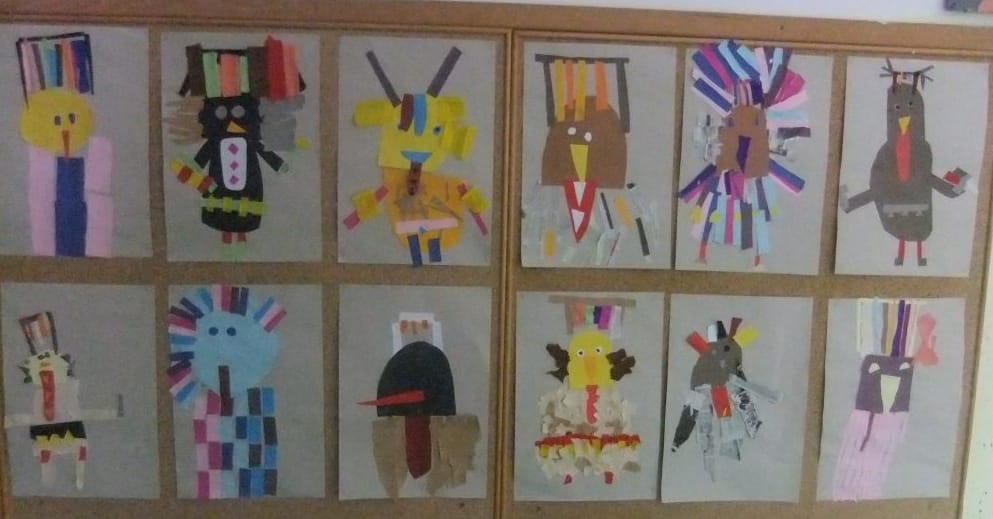
Torn paper collage: on a white sheet or even better, cardboard in A4 size, draw the simplest picture possible. Choose the colors you need for the drawing and tear colored paper into small pieces. Try to tear all the pieces into approximately equal-sized squares. Then gradually apply glue section by section of the picture and glue the pieces. It’s recommended to start gluing the background and then glue in rows from top to bottom.
Collages of various types:
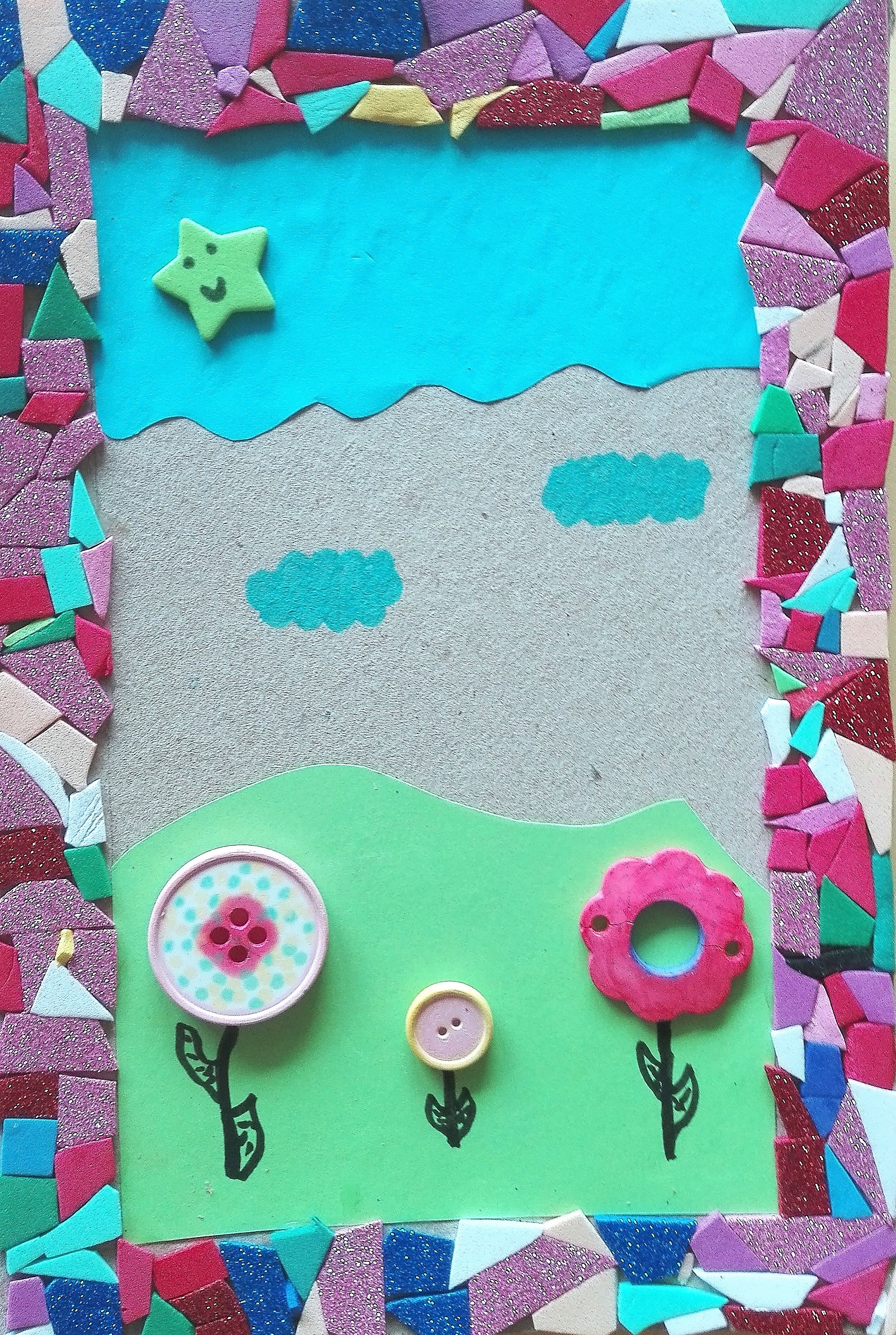
From paper or fabric: Prepare a piece of paper or fabric that will serve as the background of the picture and glue it onto a firmer base. Around the chosen base, glue strips of paper/fabric to create a frame. If you use paper, cut out or simply tear all the pieces of the picture that will make up the central part. First, arrange everything without gluing to see if you like the picture. Choose simple motifs. If there’s too much empty space, you can fill it with smaller pieces of paper/fabric. So you’ll also need glue and scissors.
 Source1: Photo source
From pasta, seeds, natural materials from the forest, buttons, glitter, and other items: Just as we made a collage from paper or fabric, we can make a collage from pasta, seeds—if you don’t want to use food, you can substitute with various buttons, glitter, pebbles, twigs, leaves and other items. Again, we need cardboard to draw the simplest possible picture on it and glue to attach everything to the cardboard. Again, fill the drawing gradually—apply glue to a section of the picture, attach your material, and then move forward.
You can also use stones of different sizes and shapes, which you can paint beforehand or paint after the stones are already glued.
If you use pasta, for example, you can paint the pasta beforehand or paint the picture later when it’s finished.

Source2: Photo source
Painting stones: is another popular “artistic” technique. To make it, you need a few
smooth stones as possible, which you wash and dry beforehand. Then paint all the stones with a thick layer of white (poster) paint and let them dry. Then draw a picture on each stone. First, paint the larger surfaces and wait for them to dry, applying the paint with a thicker brush. Wait for it to dry and finish the details with a thinner brush. If you don’t want the colors to wash off, coat the stones with clear varnish when they’re dry.
It’s not necessary to paint the stones completely with white paint. You can draw a picture with white paint and then color it, while the surroundings remain in the natural color of the stone.
Finger painting: using poster paints, the child can use their fingers instead of a brush
and draw by dabbing. You can tie several cotton swabs together with a rubber band and draw with that.
You can also make frames for your artistic creations. A frame is made by:
- From corrugated cardboard or thicker cardboard (which you can also paint or decorate later), cut out 4 strips approximately 3 cm wide with scissors, which you glue to cardboard with adhesive tape. Of course, consider the size of the picture you want to put in the frame.
Mandala
Mandalas have a ritual function in Tibet, Nepal, and India, while in our cultural space we use them to establish balance. Mandala coloring books are very popular among adults, and now we present an idea for making mandalas with your child outdoors and also in the kitchen.
Outdoor mandala: First, go into nature and gather as much material as possible that you’ll later use to fill your mandala. This can be leaves of different colors and shapes, flowers, stones, sand, twigs, cones and pine cones, sticks, needles. Anything—let your imagination run free. First, draw a mandala on the ground with chalk. A circle that you divide into different sections that you’ll fill later.
Then draw your mandala on the ground with chalk. Divide the circle into several different smaller parts that you’ll later fill with the gathered material. Look for inspiration for the mandala in nature. If you look carefully, you’ll see they’re all around us. Hint: sunflower.

Indoor mandala: After outdoor activities, a healthy snack is welcome. With your child, you can prepare a mandala on a plate using various vegetables and fruits, and then everyone can eat it together with even greater joy.
Elastic Jump
Elastic jump was definitely one of my favorite games in elementary school. I loved it even more when I grew a little and could handle all the high jumps.
You can play the game alone by putting the rope around a (heavy) chair or around a tree, for example. However, it’s more interesting if at least two people are playing. Some instructions are also collected at this link.
Did childhood memories come back to you too? Quickly get the elastic, you can go to the nearest sewing supplies store or a well-stocked department store. And “klip klap klop mi igramo hulakop” or better known as “šlik šlak šlok, naj bo pika ali stop”.

Source3: Photo source
Fort
“Building” a fort is definitely an activity that fathers will happily join, as they too will forget their worries and return to carefree childhood days. Who among us didn’t love forts? Since it’s been so long ago, let’s refresh our knowledge a bit.
At home, find various sheets, blankets, large towels, chairs, boxes, battery-powered lights, clothespins, ropes, chairs. Use the couch, table, books that will serve as weights or anything else that will help make your fort as stable as possible 🙂. Be creative. Build your fort. Maybe it will be so large and comfortable that you’ll even spend the night in it. Then you’ll also need a pillow, blanket, or perhaps a sleeping bag.

Source4: Photo source
Household Chores
You can always include your child in household chores. Let them help you with washing, hanging, and folding laundry. Putting away dishes. Cooking, cleaning. This way you’ll teach your child work habits, strengthen their skills, and they’ll surely surprise you with some innovative idea. They’ll also become more independent and self-reliant. They’ll learn a certain responsibility and the work itself.
All of this affects their emotional growth, you connect as a family, they learn to see what needs to be done for normal life. They learn cooperation and see that they can help others. By dividing the work, it gives the child a sense of inclusion. This prepares them for life and ensures they don’t just wait for us to do things instead of them. They also learn order, appreciate our work and the work of others, and respect what’s been done, consequently valuing a nice or tidy home more. Involving children in household chores is not about punishment, but about normal upbringing and preparation for life. Let’s look at some examples of household chores divided by age group.
Household chores for toddlers aged 2-3: putting away toys (and books) in their place, putting away the blanket and pillow in their place if they use them for playing, for example. Show the child where to put their dirty clothes and include them in the process of removing stubborn stains, for example, by rubbing with soap or spraying stains with water (so they don’t put cleaning products in their mouth). Help us wash fruits and vegetables, can bring bread to the table, for example. Include them in dusting, wiping floors by giving them their own cloth. Help with loading and unloading the washing machine and hanging and collecting laundry. Also with folding and putting away laundry. Putting away their shoes and jacket.
Household chores for preschool children aged 4-5: still perform all the previously mentioned tasks together with parents. But you can also include them in caring for pets if you have them, by pouring food and changing water. With laundry, have them find matching pairs of socks. They can water flowers, help in the garden by pulling weeds, for example. They can take dishes from the table and rinse them under water. They can also set the table. In the kitchen, include them by having them peel eggs, mix ingredients when making bread or pastries, for example. They can mix a salad and similar. Teach them to separate waste and also get them used to taking a small bag to the trash bin. They can also vacuum or push a broom. If they spill or scatter something, they should participate in cleaning up.
Household chores for children aged 6-9: At this age, let them perform some tasks independently (at your discretion). They put away toys and books in their place. In the kitchen, they can also help by cutting or weighing something. They can wash and peel fruits and vegetables. When putting away dishes, they can help by washing, wiping, and stacking. They can also load dishes into the dishwasher and unload them. They prepare simple meals such as cereal. They set the table for a meal, wipe it, put away dishes. They take dirty laundry to the laundry basket, sort laundry by color. Every morning they should make their bed. They clean up after themselves if they spill or scatter something. They also vacuum, wipe windows, floors, help clean the bathroom and toilet. They also change the toilet paper roll. They help put away groceries from the store, take trash to the bin. They bring in the mail, care for pets, help care for younger siblings. They tidy their room.
Household chores for children aged 10-14 and older: They help write a shopping list of what’s needed for the home, already prepare some independent dishes like fried eggs, fold at least their own clothes nicely in the closet, independently clean the kitchen, bathroom, toilet. They accompany younger siblings to and from school and can help them with homework. The older they are, the more independent they can be in meal preparation. They can also help in the garden, with mowing (under supervision), cleaning the surroundings, the car, participate in “spring” cleaning. Don’t forget to include them in minor repairs (changing a light bulb, tightening a screw, replacing or cleaning faucet screens and similar) and home renovation (painting). Include them in sewing buttons or patching holes in socks.

Read to your child. If they can read on their own, have them dedicate some time each day to reading. Listen to music, dance, go for a walk in nature, be creative and imaginative. The sky’s the limit.