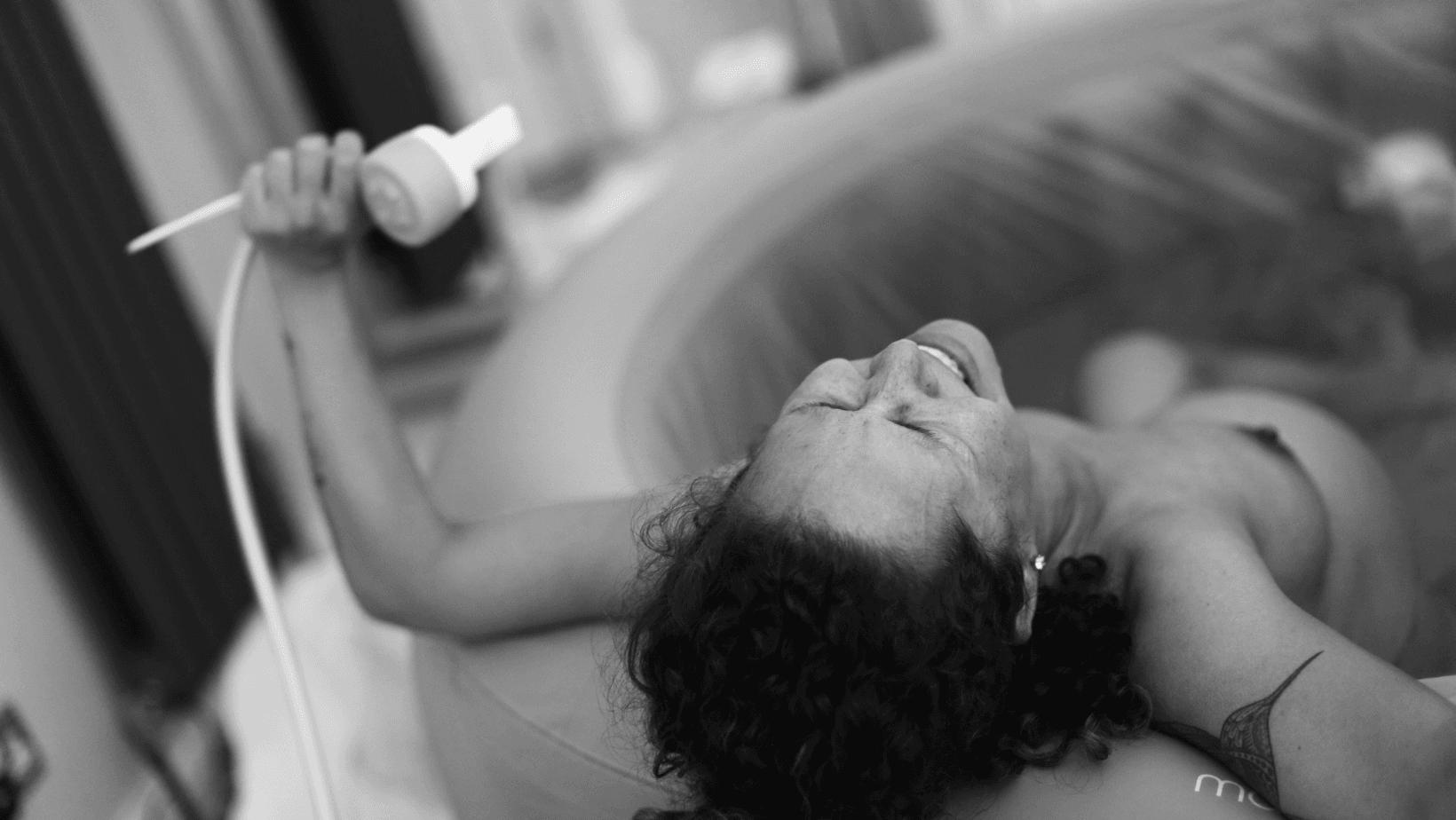
Childbirth is an emotional event involving both physiological and psychological mechanisms. Women describe labor pain as the most intense pain they have ever experienced. On a scale from 0 (no pain) to 10 (unbearable pain), it is rated between 7–9 on average. However, the memory of it fades over time.
Labor pain has two components: VISCERAL and SOMATIC.
Visceral pain is present at the beginning of the first and the beginning of the second stage of labor. The pain is transmitted via unmyelinated nerve fibers through the uterus and cervix to the hypogastric plexus into the spinal cord at the level of T10 to L1 (women usually feel it in the lower abdomen, sacrum, and lower back; it can also radiate into the leg). The pain is poorly localized and cramp-like. Meanwhile, somatic pain occurs at the end of the first and the end of the second stage of labor. It involves rapid transmission via myelinated fibers through the pudendal nerve and perineum along three sacral nerve roots: S2, S3, and S4. This pain is more intense, confined, and clearly localized (women feel it in the vagina, rectum, and perineum). Relieving labor pain is complex and often represents a major challenge, as many factors influence how it is experienced.
Labor, Maguire (2008) – The Pain of Labour
For example: the (negative) stories women are exposed to during pregnancy strongly influence their perception of labor and labor pain. I believe pregnant women should be very “picky” about whose advice they listen to and which forums they read. I encourage them to seek relevant information and not expose themselves unnecessarily to negative stories and vibrations. Women who lack support, have insufficient knowledge about childbirth, haven’t attended childbirth and parenthood preparation classes, younger women, women with lower economic status and less education, abused women, and women facing loss or grief at the time of birth also cope less effectively with labor pain. Past experiences (which is why it’s important for women to have positive birth experiences!), cultural and religious beliefs, and fear due to the reasons described above also affect pain perception. Fear makes women tense, which increases pain, and then the fear grows further. We call this the cycle of tension and pain.
Read: Fear of childbirth
A midwife will tell you that pain is a physiological process and is necessary for labor. We often compare labor to a marathon and the laboring woman to marathon runners. If we encourage marathon runners through the pain of the race so they can reach the finish line and feel satisfaction and triumph, why do we act differently during labor? Personally, I believe a lot depends on birth preparation. A marathon runner also prepares for the marathon, training hard to endure the effort. Similarly, for a physiological birth where pain is managed only non-pharmacologically, a woman needs good preparation—a “parenting school.” She will gain knowledge about the course of labor, the stages of labor, and the hormones important during birth—which will also help her understand labor pain. She must be familiar with certain interventions, procedures, and emergency situations; as they say—knowledge is power. With good preparation, there will be less fear. Sometimes, pharmacological pain relief can take away a woman’s sense of triumph. On the other hand, another woman might have a bad experience if the pain isn’t managed pharmacologically. That’s why the midwife must know the woman in front of her. It is very important for women to trust midwives and seek midwifery care, as only a midwife who guides a woman through pregnancy and accompanies her during birth can truly know her well. Since the current system isn’t set up to enable this, we encourage women to attend birth preparation classes where they get relevant professional information and to avoid forums and other forms of social media where people mostly create a false sense of perfection with their posts.
Why does a contraction hurt? A contraction involves vasoconstriction (blood vessels constrict), which causes lower oxygen levels in the muscle fibers (ischemia), leading to pain. Since contractions become stronger and longer as labor progresses, the ischemia is greater, and therefore the pain increases. Additionally, there is mechanical pain from the opening of the cervix and the pressure of the fetus on surrounding tissues.
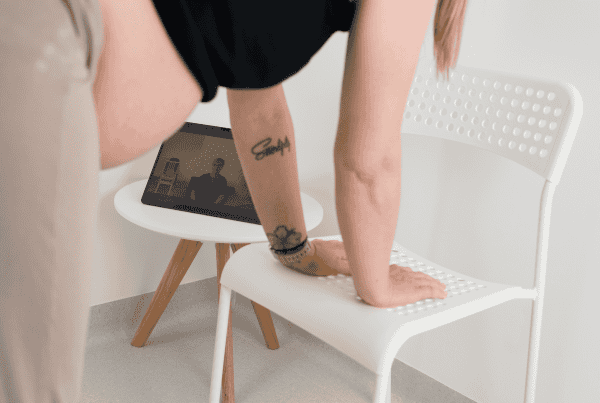
Non-pharmacological pain relief is pain relief without medication. It works according to the gate control theory—at the same point where pain impulses enter the spinal cord, there are also nerves that transmit sensory data about skin stimulation from heat and touch. Are you starting to see where this gate leads? 🙂 So, pain and sensory stimuli share the same receptors, but sensory impulses are transmitted faster. If we fill these receptors with sensory stimuli (e.g., touch, heat), we prevent or inhibit the access of pain stimuli through the “gate” in the spinal cord to the brain. That’s why we midwives will show you and introduce ways to fill these receptors during birth preparation and in the delivery room. This includes warm compresses, showers, baths, touch, massage, pressure on the sacrum, and shaking the large thigh and gluteal muscles. Acupressure, acupuncture, and TENS work the same way. In an undisturbed birth, where nature uses hormones to ensure labor flows, endorphins will help you naturally relieve the pain. That’s why I always start with hormones in the first of the three workshops in “Parenting School with a Twist” – Preparation for Birth and Parenthood in Three Parts:

I think it’s very important that you first understand the physiology and how hormones work before we build on that knowledge. So, good birth preparation and choosing the place of birth are the foundation for reducing your fear during labor and helping you cope better with labor pain, as you will be confident and trust the people around you. Your physical fitness, the course of the pregnancy, and the start and progress of labor are also important.
I suggest you check out one of the “online lectures” or attend the “Parenting School with a Twist” – birth and parenthood preparation.
What else is important? Check out these posts:
- Birth plan,
- Mother-friendly hospital – 10 steps,
- Answers to my research questions in my master’s thesis,
- Breastfeeding in the delivery room,
- Preparing the perineum for birth
- Bonding between mother and child after a C-section,
- The first hour after birth,
- Cord clamping,
- 9 instinctive phases of the newborn,
- Parenthood and bonding,
- Birthing positions
- Techniques and procedures that help preserve the perineum
- First care of the newborn after birth…
So, non-pharmacological relief is most commonly achieved with the Lamaze method (breathing, relaxation) and the Bradley method (partner involvement, safe and calm environment), which women most often include in their birth plans.
Click for the link to the videos.
To reduce pain stimuli from the contraction of the cervix, we encourage the woman to move, change positions, and use counter-pressure. To activate peripheral sensory receptors, we use heat, touch, massage, water, acupressure, acupuncture, and TENS. To inhibit the entry of stimuli through the brain into the spinal cord, we introduce the woman to distraction options such as breathing techniques, hypnosis, aromatherapy, and listening to music. In all of this, it is very important that the woman has the support of a midwife and, of course, her partner (Pajntar et al., 2015).
Pain can also be relieved pharmacologically—with medication. More on different ways of relief: Pain relief during labor – a booklet translated and adapted by the Slovenian Association for Anesthesiology and Intensive Care Medicine, Slovenian Medical Association, with permission from the authors of the booklet: Pain relief in labour; Information for Mothers Subcommittee of the Obstetric Anaesthetists’ Association: www.oaaformothers.info.
It is important for laboring women to be aware of the pain relief methods available in their chosen hospital. It can be a big shock if a woman prepares for birth with epidural analgesia but it isn’t available in the chosen hospital, or at least not 24 hours a day. This has a very significant impact on the birth. The same applies to water birth, pain relief with Ultiva, and others.
Read more: Labor pain relief – epidural analgesia

Modern Labor Analgesia (IASP, 2011)
Pajntar M, Novak Antolič Ž, Lučovnik M (2015). Nosečnost in vodenje poroda. 3rd, revised edition. Ljubljana: Društvo Medicinski razgledi, 121-90