Preserving the perineum during childbirth is the desire of every woman in labor and birth attendant (Walsh, 2012a), but how to achieve this goal is not always clear. Many factors related to the woman in labor and care during childbirth affect the final condition of the perineum. The birth attendant (midwife, obstetrician) has no influence on certain factors, such as the woman’s weight and race, previous birth injuries, fetal weight and presentation, but can use their knowledge to influence the woman’s position during labor, the method of pushing, the use of perineal relaxation techniques, the (non)use of episiotomy, and manual or hands-off perineal support, thereby contributing to a better birth outcome (Renfrew, 1998).
Perineal care during pregnancy
Various authors describe different methods for preserving the perineum that are performed during pregnancy, such as perineal massage (Beckmann and Garret, 2009), pelvic floor muscle exercises (Bruce, 2003), eating foods rich in vitamins C and E (Brailey, 2003), using the EPI-NO® vaginal device (Ruckhäberle et al., 2009; Kok et al., 2004), and visualization (Walsh, 2012a), which will be presented in this chapter.
Perineal massage
Perineal massage is preparation of the perineum for childbirth (Burns, 2011). Perineal massage in the last month of pregnancy allows easier stretching of the perineum during labor (Beckmann and Garret, 2009).
Beckmann and Garrett (2009) present perineal massage during pregnancy very well in their article. Women who massage the perineum from approximately 35 weeks of pregnancy onward are less likely to suffer perineal injuries during childbirth that require suturing. No difference is observed between women who massaged the perineum and those who did not when it comes to the occurrence of first, second, third, and fourth-degree tears during childbirth. However, there is a statistically significant difference when it comes to episiotomy, as it is performed in 16% fewer women who massaged the perineum compared to those who did not. This finding applies to first-time mothers, while for women who have already given birth there is no statistically significant difference between those who massaged the perineum and those who did not. Women who have previously given birth and practiced perineal massage during pregnancy report less perineal pain three months after birth compared to women who did not massage the perineum. First-time mothers who massaged the perineum also report less pain three months after birth, regardless of whether they had an episiotomy or not (Beckmann and Garrett, 2009).
Most women who massage the perineum during pregnancy report that the massage is acceptable to them and believe it helps them better prepare for childbirth (Labrecque, 2001). Pregnant women report that in the first weeks the massage causes discomfort and a burning sensation, is unpleasant and can even be painful. Nevertheless, most say that the burning sensation and pain disappear after one or two weeks of performing the massage. The majority (79%) report that they would use the massage in subsequent pregnancies, and as many as 87% of women would recommend it to other pregnant women (Beckmann and Garrett, 2009).
Given that perineal massage with fingers from 35 weeks onward reduces the frequency of birth injuries (especially episiotomies) and perineal pain three months after birth, and that women accept it well, all pregnant women should be informed about the benefits of perineal massage and the technique for performing it (Beckmann and Garrett, 2009).
Burns (2011) provides instructions for performing the massage in her manual on antenatal perineal massage.
INSTRUCTIONS FOR PERFORMING PERINEAL MASSAGE (Burns, 2011):
- perineal massage can be performed by the pregnant woman or her partner,
- the massage is best performed after bathing or showering, as warm water softens and relaxes the perineum,
- it is recommended to use unscented oil (olive, almond, vegetable, sunflower) for perineal lubrication,
- a comfortable position for the massage must be chosen (sitting or semi-sitting position on the bed with bent knees, lying position while bathing in a tub with one leg raised, etc.),
- it is important that the pregnant woman is relaxed, in an environment where she feels safe and where no one interrupts her,
- the pregnant woman or partner should wash their hands, apply oil to the thumbs or index fingers of both hands and place them in the vagina, pressing downward toward the rectum and to the sides,
- this is followed by semicircular, rhythmic U-shaped movements with gentle stretching of the vagina and surrounding tissue,
- during the massage, the pregnant woman should focus on relaxing the perineum,
- the massage should last approximately five minutes or as long as the pregnant woman finds comfortable,
- over time, as the perineum becomes more elastic, the pregnant woman or partner can increase the pressure toward the pelvic floor during the massage,
- the massage should be performed every day or every other day,
- women with genital herpes or vaginal inflammation should not perform perineal massage.
Pelvic floor muscle exercises
Pregnant women are recommended to perform pelvic floor strengthening exercises because it has been proven that theyreduce the likelihood of urinary incontinence during pregnancy and the postpartum period (Lee and Thomas, 2009). Authors have different opinions regarding the effect of performing pelvic floor muscle exercises on childbirth. Bruce (2003) believes that performing pelvic floor strengthening exercises facilitates childbirth, while Agur et al. (2008) concluded that performing pelvic floor muscle exercises does not affect the number of episiotomies performed, the degree of birth injuries, or the duration of the second stage of labor.
Diet rich in vitamins C and E
Some midwives recommend that pregnant women eat a diet rich in vitamins C and E, as these vitamins are believed to contribute to greater elasticity of the skin and soft tissues. Brailey (2003) says that properly nourished women with adequate vitamin C intake more often have healthy tissues that are also more elastic. Bruce (2003) says that vitamins C and E and bioflavonoids contribute to greater skin elasticity, which means that the perineum will stretch more easily during childbirth in women who have included these vitamins in their diet.
Use of the EPI-NO® vaginal device
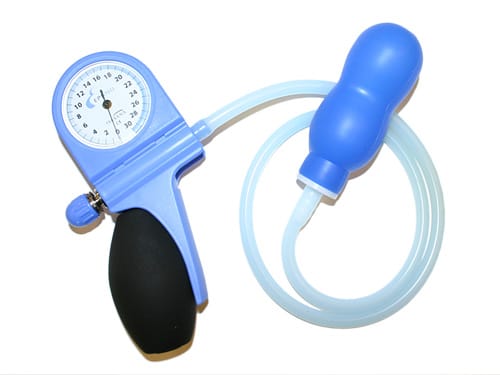
EPI-NO® is a vaginal device created with the aim of reducing the number of episiotomies and increasing the frequency of an intact perineum after childbirth. This device consists of a silicone inflatable balloon and a hand pump connected to the balloon. It is designed for vaginal dilation, with the aim that the vagina and perineum become accustomed or adapted to the passage of the fetus with the help of this device. Pregnant women can use EPI-NO® to train their pelvic floor muscles and develop a sense of pushing that will be useful during childbirth (Ruckhäberle et al., 2009).
Pregnant women should use EPI-NO® from 37 completed weeks every day for approximately fifteen minutes until childbirth. Before use, the balloon must be inflated and lubricated so that the pregnant woman can insert it into the vagina deep enough that 2 cm is still visible outside. She then holds the balloon with her left hand and slowly inflates the balloon with the hand pump using her right hand. If an unpleasant sensation or pain occurs, she should stop. When the balloon is inflated, the pregnant woman should try to control the balloon’s sliding outward with her vaginal muscles (simulating childbirth). She can initially help herself by pulling the balloon with her left hand. She should repeat this exercise for approximately 15 minutes (Kok et al., 2004)
Kok et al. (2004) found that the use of EPI-NO® in first-time mothers reduced the frequency of episiotomies and the degree of spontaneous tears (there were no third or fourth-degree ruptures), but overall the perineal outcome was not much better than in women who did not use the device.
Ruckhäberle et al. (2009) report a significant increase in the percentage of women with an intact perineum after childbirth (by 11.7%) and a decrease in the percentage of episiotomies (by 8.6%) in the group that used EPI-NO®, but they did not observe significant differences in the incidence of perineal ruptures between women who used the vaginal device and those who did not.
The use of the EPI-NO® vaginal device is simple and safe for mother and baby, reduces the frequency of episiotomies, and increases the chances of an undamaged perineum (Ruckhäberle et al., 2009).

Visualization
In literature that approaches childbirth more alternatively or naturally, we find visualization. The pregnant woman imagines the perineum and vaginal walls as very elastic tissue that serves its purpose (stretching during childbirth). This approach has not been researched, but apparently reduces fear and increases the pregnant woman’s confidence (Walsh, 2012a).
The five techniques described above are used most frequently, but there are others that pregnant women can use.
Perineal care during labor
Perineal care continues during labor. While the pregnant woman herself is key in preparing the perineum for childbirth, during labor the midwife is also responsible for the perineum. Factors and procedures that help preserve the perineum during labor include applying warm compresses to the perineum (Dahlen et al., 2007), water birth (Dahlen et al., 2012; Geissbuehler et al., 2004), spontaneous pushing (Sampselle and Hines, 1999, Renfrew et al., 1998), giving birth in “alternative” positions (standing, kneeling, on all fours) (Shorten et al., 2002) and on the side (Walker et al., 2012; Meyvis et al., 2012; Shorten et al., 2002), delivering the head between contractions (Alberts et al., 2006), and prophylactic injection of the perineum with hyaluronidase (Barreto Scarabotto and Gonzales Riesco, 2008).
Warm compresses
Warm compresses applied to the perineum in the second stage of labor are commonly used during childbirth due to the belief that they reduce perineal injuries and increase the woman’s comfort during perineal stretching (Dahlen et al., 2007). Heat causes dilation of blood vessels and increases blood flow through the perineum, which affects reduced pain transmission and increased collagen extensibility (Dahlen et al., 2009; Sanders et al., 2005).
Dahlen et al. (2007) investigated the effect of warm compresses on the perineum and on the woman’s well-being. They found that the application of warm compresses during labor did not reduce the number of perineal injuries requiring suturing, but it greatly reduced severe perineal injuries (third and fourth-degree ruptures). Women who did not have warm compresses applied suffered severe perineal injuries 50% more often than women who had warm compresses applied. They found that the use of warm compresses has several positive effects, as it reduces perineal pain during labor, on the first and second day after birth, and the occurrence of urinary incontinence.
The application of warm compresses to the perineum in the second stage of labor is very well received by women in labor and midwives because it reduces pain and burning sensation during perineal stretching and increases the woman’s comfort (Dahlen et al., 2009).
This simple and cost-effective technique should be included in the care of women in labor in the second stage (Dahlen et al., 2007).
Dahlen et al. (2007) provide detailed instructions for applying warm compresses in their article.
APPLICATION OF WARM COMPRESSES (Dahlen et al., 2007):
We begin applying warm compresses when the fetal head begins to stretch the perineum and the woman feels the stretching. We prepare a sterile metal jug with boiled tap water (45º-59ºC) in which we soak a sterile perineal pad. We wring out the pad and gently place it on the perineum between contractions. We re-soak the pad to maintain the warmth of the compress during the contraction. We change the water every 15 minutes because it cools to 38º-44ºC and repeat the procedure until the baby is born.
The author finds this method suitable for use, as it is cost-effective, does not take much time for the midwife, and greatly facilitates childbirth for the woman in labor.
Water birth
Walsh (2012b) claims that water birth is physiological birth. The warmth of the water relieves muscle cramps and thus reduces pain, water negates the effects of gravity and reduces discomfort and pressure on the pelvis (Hamilton, 2009). The water medium facilitates movement and changing positions, which is necessary for normal labor progression (Walsh, 2012b).
Water birth has a favorable effect on mother and baby. In water birth, more severe perineal injuries (third and fourth-degree ruptures) occur less frequently, and midwives or obstetricians also perform episiotomies less often. Women who give birth in water lose less blood after birth and use pain relief less often during labor compared to women who give birth outside water. The advantages of water birth also include shorter labor duration and fewer neonatal complications (Geissbuehler et al., 2004).
Dahlen et al. (2012) found that newborns born in water compared to those born in a semi-sitting position were less frequently assessed with a score of 7 or less on the Apgar scale at five minutes, and that women who gave birth in water had fewer perineal injuries than women who gave birth on a delivery bed.
Spontaneous, undirected pushing
Sampselle and Hines (1999) describe two methods of pushing for women in labor in the second stage. They speak of spontaneous or undirected pushing when the woman feels spontaneous pressure during a contraction and pushes on her own. Spontaneous pushing occurs several times during a contraction. The woman then holds her breath for five to six seconds or not at all. Spontaneous pushing is usually accompanied by grunting during exhalation. We speak of directed pushing when the midwife or obstetrician feels that a contraction is beginning and tells the woman to start pushing. The birth attendant encourages the woman to hold her breath for ten seconds and push during this time, then quickly take a breath and push again. The purpose of directed pushing is to maintain spontaneous pushing for as long as possible during the contraction (Sampselle and Hines, 1999).
The authors believe that slow perineal stretching is more likely to occur during spontaneous pushing, when the woman listens to her body, than during directed pushing, when she listens to the birth attendant. The breathing pattern that occurs during spontaneous pushing is associated with lower abdominal pressure and more effective fetal expulsion (Sampselle and Hines, 1999).
In a smaller study, Sampselle and Hines (1999) found that spontaneous pushing is associated with a greater likelihood of an intact perineum after birth, while directed pushing is associated with a greater risk of serious perineal injuries. One week after birth, women who pushed in a directed manner reported more severe perineal pain than women who pushed spontaneously.
Renfrew et al. (1998), after reviewing the literature on practices that reduce genital tract injuries during childbirth, concluded that women who pushed in a directed manner during the second stage of labor suffered more severe perineal injuries and were sutured more often than women who pushed spontaneously.
Delivering the head
Controlled delivery of the fetal head between contractions reduces the rate of perineal injuries. Delivering the fetal head in the time between two contractions requires cooperation and effort from both the woman in labor and the midwife. The goal is to deliver the fetal head slowly and in a controlled manner, which requires patience and good communication between the midwife and the woman in labor. A gentle approach to vaginal birth improves the health of new mothers by reducing the frequency and degree of birth injuries (fewer injuries requiring suturing) (Alberts et al., 2006).
Myfried (1997) mentions two more techniques that midwives often use in connection with delivering the head. These are head flexion and the Ritgen maneuver. In head flexion, the birth attendant presses with their hand on the occiput of the fetal head in the direction toward the perineum. In the Ritgen maneuver, the birth attendant applies pressure with one hand on the perineum in an upward direction, while extending the head upward with the other hand. Both techniques, although completely opposite, are used with the aim of reducing the diameter of the emerging head and preventing birth injuries to the woman in labor. Although the techniques have been used for more than a century, the question remains whether they contribute to preserving the perineum at all, as there is very little research on this topic. After studying the normal birth mechanism, it becomes clear that the fetus automatically positions itself in the most suitable position for passage through the birth canal. As the head passes through the birth canal, it is gentle extension that allows the head to be born with the smallest diameter. The head flexion technique thus does not reduce the diameter of the emerging head and can create additional pressure on the perineum. The force with which the birth attendant acts on the head probably only slows down the delivery of the head, which affects slow perineal stretching and consequently fewer injuries. This explains why this technique has so many advocates among midwives. Extending the fetal head using the Ritgen maneuver causes the head to be born with a larger circumference. Both techniques can thus increase the chances of birth injuries.
Perineal massage in the second stage of labor
Midwives often perform perineal massage during the second stage of labor (Geranmayeh et al., 2012). However, the results of research on this topic are quite different. Alberts et al. (2005) and Stamp et al. (2001) concluded that perineal massage during labor does not contribute to perineal integrity, but greatly reduces the frequency of third and fourth-degree tears. Geranmayeh et al. (2012) investigated the effect of perineal massage with petroleum jelly and found that massage shortens the second stage of labor and increases the chances of an intact perineum, mainly due to a lower number of episiotomies. In the group where midwives performed perineal massage, there were no third and fourth-degree tears, but first and second-degree tears occurred more frequently. Schuppe (2003) warns that rough massage can cause tears, even though its purpose is the opposite. Some women are bothered or hurt by touching the perineum and it prevents them from relaxing and focusing on childbirth (Schupe, 2003). Too frequent touching can cause swelling, which increases the possibility of a perineal tear (Bruce, 2003).
Birth positions click
Most women during labor need the possibility of changing positions and freedom of movement. Movement during the first stage of labor has a favorable effect on cervical dilation and helps the fetus to the best position for passage through the pelvis. Women in traditional societies almost always assume upright positions during childbirth; they only give birth lying down if forced to do so by the forces of their culture. Positions that women instinctively choose during childbirth include sitting, kneeling, standing, squatting, or the all-fours position. Women can help themselves with a rope on which they hang with their weight, with birth chairs, with sticks stuck in the ground, or by embracing a partner or companion (Gaskin, 2007). The advantages of upright positions are: better use of gravity, greatest blood flow between mother and baby, better adaptation of the baby to passage through the pelvis, stronger and more effective contractions, increased pelvic diameter when squatting and kneeling (Gaskin, 2007), shorter second stage of labor, lower rate of assisted delivery, fewer episiotomies, and lower rate of abnormalities in fetal heart function during labor (Shorten et al., 2002).
In Slovenian maternity hospitals, women mostly give birth on their backs, in some places even with the buttocks raised. This method is non-physiological, against all physical principles, extremely uncomfortable and unsuitable for the woman in labor, and can also be dangerous for the baby (Pajntar, 2004).
Traditional lying position
The first record of a woman giving birth on her back in bed speaks of Louise de la Valliere, mistress of French King Louis XIV in 1663. The choice was probably not hers, but her lover’s, because he wanted to sit behind a curtain and witness the birth of his child. The use of obstetric forceps further reinforced the fashion of giving birth lying down, because this position is most suitable for their use. In 1668, Francois Mauriceau published a treatise on midwifery in which he recommended that women lie on their backs during childbirth. This position favors the birth attendant more than it benefits the woman. By the end of the 19th century, birth chairs were used very rarely. “Modern” women were expected to give birth lying down, as giving birth in a squatting position was far from ladylike and became characteristic of the lower classes. The lying position is thus a product of the industrial revolution, invented for the comfort of the birth attendant (Gaskin, 2007). In the 20th century, the use of this position increased further because it is suitable for introducing new technology. The supine position with the head raised and buttocks elevated and thighs drawn to the abdomen became the usual method of giving birth in Slovenian maternity hospitals (Skoberne, 2000).
Giving birth lying on the back allows maintaining asepsis, assessing fetal heart rate, performing an episiotomy, and suturing it. The lying position is suitable when labor progresses very quickly (de Jonge et al., 2008). This position has many disadvantages, one of which is the increased need for episiotomy due to tension in the vagina and perineum (Perlis, 1992; Shorten et al., 2002). Meyvis et al. (2012) compared perineal outcomes in births in the lithotomy position and the side-lying position and found that far fewer women suffered perineal injuries in the side-lying position. Almost half of the women who gave birth on their side had an undamaged perineum, compared to a third of women who gave birth in the lithotomy or lying position. In the lying position, many more episiotomies were performed, the healing of which is slow and painful. Renfrew et al. (1998) also found that the lying position during delivery is unfavorable for the perineum.
Left lateral position
The woman in labor lies with her left side more toward the right edge of the bed. The left leg is extended or slightly bent at the hip and knee, and the right knee is drawn to the abdomen (Skoberne, 2000). The partner or birth attendant can help hold the right knee, but must ensure that the distance between the knees is equal to the width of the shoulders and that the knees face forward and not to the side, as spreading the knees reduces the pelvic diameter (Bruce, 2003). This position is favorable for both the woman in labor and the midwife, because the genitals are clearly visible and easily accessible (Lavrič, 1966). In the lateral position, the uterus does not press on the large vessels in the abdomen, so hypoxic phenomena known in the supine position occur less frequently (Pajntar, 2004).
Nicholl and Cattell (2006) compared the supine position with the side-lying position and found that the side-lying position greatly reduces perineal injuries. Shorten et al. (2002) came to the same result, finding that the side-lying position is favorable for the perineum, as it results in a below-average number of episiotomies and tears requiring suturing, and the perineum remains undamaged in 66.6% of cases. Fewer perineal injuries requiring suturing were also observed by Soong and Barnes (2005) and Meyvis et al. (2012). Walker et al. (2012) report an intact perineum in 40.3% of women who moved during labor, pushed spontaneously, and gave birth on their side, compared to 12.2% of intact perineums in women who lay during labor, pushed in a directed manner immediately after complete cervical dilation, and gave birth in the lithotomy position.
Squatting or standing position
In Western and Northern Europe, the method of giving birth is increasingly recommended where the woman walks around the delivery room, and when she feels spontaneous pressure, she squats and tries to push. The partner or birth attendant helps her by standing behind her and holding her under the armpits for support. With this method of giving birth, the midwife must catch the baby at floor level. Such births rarely end with a cesarean section (1.5%), and episiotomies and tears are extremely rare (Pajntar, 2004). The squatting position accelerates blood circulation in the pelvic area, and the uterus and pelvic floor muscles have better tone. Birth is shorter in this position. The shorter second stage of labor and easier birth are the result of gravitational force, which pushes the uterus forward. As the fetus descends into the pelvic cavity, the pressure of the leading fetal part on the pelvic floor triggers a spontaneous pushing reflex, and the abdominal muscles work in coordination with contractions (Skoberne, 2000).
Shorten et al. (2002) used a retrospective analysis of 2,891 normal vaginal births to compare different birth positions and their effect or consequences on the perineum. They concluded that the squatting position is least favorable for the perineum, as it caused the highest rate of tears requiring suturing (> 53%), the highest rate of severe tears (third-degree ruptures), and the lowest rate of intact perineums (< 42%). The standing position proved to be more favorable, as 54.7% of women had an intact perineum.
Sitting position
Giving birth in a sitting position has been possible since birth chairs or stools were made, as it is quite difficult to give birth sitting on a delivery bed. In the Netherlands and Scandinavia, a U-shaped chair is popular, reminiscent of the stone chair on which ancient Egyptian women gave birth. This chair is used in the second stage of labor. The woman in labor sits down and leans forward and pushes. This position is less favorable for the midwife because she catches the baby at floor level (Pajntar, 2004).
Geissbuehler and Eberhard (2000) compared the condition of the perineum after birth on the Maia birth chair and birth in bed. They found that births on the birth chair resulted in a lower rate of episiotomies and third and fourth-degree tears, but the rate of first and second-degree tears increased compared to births in bed.
All-fours position
In this position, it is important that the distance between the knees is the same as between the shoulders, so that gravity optimally affects the course of labor (Odent, 2000). In this position, the woman in labor is leaning forward, which increases intra-abdominal pressure and facilitates birth (Pajntar, 2004). The all-fours position is good to use if shoulder dystocia occurs (Gaskin, 2007) and when delivering a baby in occipitoposterior presentation (Stremler et al., 2005).
Shorten et al. (2002) report 1.5% of episiotomies performed, 44.4% of tears requiring suturing, and 54.1% of intact perineums in women who gave birth on all fours. Bruce (2003) counts the all-fours position among the three most favorable positions for preserving the perineum. Soong and Barnes (2005) compared the effect of different birth positions on the perineum and found that the all-fours position is most favorable, as the rate of tears requiring suturing was lowest in this position.
Every birth position has its advantages and disadvantages, and not every one is suitable for every woman. During labor, a woman should not be restricted in freedom of movement, as she needs the possibility of changing positions, walking, sitting and squatting, and the possibility of remaining upright, because this has a favorable effect on the course of labor. The lying position is the worst possible for giving birth, so it makes no sense to force a woman to give birth on a bed with her legs in stirrups. This position is suitable only for rare urgent interventions, such as vacuum-assisted delivery and forceps delivery (Wagner, 2008). It is important that the midwife does not insist on a particular position if it does not suit the woman in labor. The midwife’s task is to encourage the woman in labor to move and choose a position dictated by her body, as this positively affects labor progression (Downe, 2009). Although upright positions during labor are proven to be more favorable for the woman in labor (Downe, 2009), midwives in our country use them very rarely (Pajntar, 2004). Catching the baby low at floor level in a sitting or squatting position is strenuous for the midwife (Pajntar, 2004). The solution lies in birth aids that are more friendly to midwives, such as birth chairs that can be placed on the bed, and in teaching midwives how to help the woman in labor in different positions while also taking care of their own health (Walsh, 2007).
Birth attendant
A woman can avoid an unnecessary episiotomy or more severe tear if she chooses a good birth attendant (Gaskin, 2007). Shorten et al. (2002) used a retrospective analysis of 2,891 normal vaginal births to compare the condition of the perineum after births attended by midwives and obstetricians. They found that the worst perineal outcomes after birth occurred in women whose labor was attended by obstetricians. Obstetricians performed episiotomies five times more often than midwives and justified this with the claim that episiotomy prevents tears requiring suturing. If this were true, obstetricians should have a lower percentage of tears requiring suturing, but this was not the case, because tears occurred more often in births attended by obstetricians (by 5-7%). Third-degree tears occurred in 1.3%, which was more than the average (0.9%). Consequently, only 31.9% of women had an intact perineum after birth attended by an obstetrician. Midwives achieved an intact perineum in 56%-61% of women.
Similar results were also found by Slome (2002) and Meyvis et al. (2012), who confirm that a woman’s chances of preserving the perineum during childbirth significantly increase if she chooses a midwife as her birth attendant.
Perineal Protection – Yes or No?
The difference between perineal protection with hands and no protection was investigated by McCandlish et al. (1998). When protecting the perineum with hands, the midwife controls the speed of the baby’s head crowning and protects the perineum by placing a hand on it and supporting it. During shoulder delivery, she uses gentle downward traction for the delivery of the anterior shoulder and upward traction for the delivery of the posterior shoulder. In the technique where the midwife does not assist with hands during childbirth, both the baby’s head and shoulders are delivered spontaneously. McCandlish et al. (1998) found that women whose perineum was protected by midwives experienced less pain ten days postpartum compared to women whose perineum was not protected. In women whose perineum was not protected, manual removal of the placenta was more frequently required. No other differences (including perineal injuries) were observed between the two techniques. Perineal protection and non-protection do not significantly impact the condition of the perineum postpartum (Walsh, 2012a), so the choice of technique should be left to the birthing woman and her birth attendant (McCandlish et al., 1998).
Prophylactic Perineal Injection with Hyaluronidase
Loose connective tissue is an integral part of the perineum. It contains fibroblasts and an extracellular matrix composed of collagen and elastic fibers, in which glycosaminoglycans and proteoglycans form a hydrated gel-like substance. Hyaluronic acid (HA), a viscous polymer, is the predominant glycosaminoglycan in the matrix that organizes the structure of connective tissue (Laurent, 1992; cited by Barreto Scarabotto and Gonzalez Riesco, 2008). Hyaluronidase is an enzymatic complex found in the skin, eyes, liver, kidneys, uterus, testes, seminal fluid, blood, and other organs and tissues. Hyaluronidase depolymerizes and hydrolyzes HA, thereby reducing its viscosity and increasing the permeability of cell membranes and blood vessels. The effect of this enzymatic complex lasts only 12 hours. It is highly probable that this enzyme modifies the connective tissue in the skin and subcutaneous muscle, making it less vulnerable and more elastic (Barreto Scarabotto and Gonzalez Riesco, 2008).
There are two studies on this topic, but their authors do not reach the same conclusions.
Barreto Scarabotto and Gonzalez Riesco (2008) studied the effects of prophylactic perineal injection with hyaluronidase during childbirth on the condition of the perineum postpartum in 71 birthing women. They compared perineal outcomes with a control group of 68 birthing women. Significant differences were observed between the groups. The incidence of perineal injuries was almost twice as high in the control group; 82.4% of women in the control group suffered spontaneous lacerations, whereas none occurred in the hyaluronidase group. Posterior perineal tears occurred in 84.3% of women in the control group, compared to 54.2% in the hyaluronidase group. An intact perineum was observed in 69.6% of women in the hyaluronidase group and 23.5% of women in the control group. The study demonstrated that prophylactic perineal injection with hyaluronidase prevents perineal injuries.
A similar study was conducted three years later by Colacioppo et al. (2011) on 160 birthing women, but they did not observe statistically significant differences between the hyaluronidase group and the placebo group. An intact perineum was found in 34.2% of women in the hyaluronidase group and 32.5% of women in the placebo group; the difference was not statistically significant. Although the incidence of second and third-degree tears and episiotomies was lower in the hyaluronidase group (28.9%) compared to the placebo group (38.8%), the difference was not statistically significant. They concluded that hyaluronidase did not increase the rate of intact perineums and did not reduce the incidence of severe perineal injuries.
Sexual Arousal
Gaskin (2007) states that it is self-evident that the male sexual organ significantly enlarges during arousal and then diminishes without injury. Childbirth is one of the events where the vagina opens, similar to what happens during sexual foreplay. Probably the only difference between the engorgement of sexual organs in men and women is that a woman cannot see her engorgement, while a man can. Nevertheless, a woman’s engorgement is equally important, especially during childbirth. If the birthing woman’s tissue is not sufficiently engorged when the baby is born, the uterus will still push the baby forward through vaginal tissues that are not sufficiently softened and open. This leads to tears. According to Gaskin (2007), it would be ideal if all vaginas engorged during childbirth, as this would prevent injuries and suturing. Gaskin (2007) never observed tears in women who kissed, caressed their clitoris, or touched themselves during childbirth. A crucial condition for this is creating a more suitable atmosphere in hospital delivery wards (Gaskin, 2007).
The techniques mentioned above are the most frequently used, but there are also others that can be employed during childbirth to keep the perineum intact.
Thanks to Ana Teppey, author of the diploma thesis “Perineal Care During Pregnancy and Childbirth (2012); supervised by mag. Teja Škodič Zakšek, dipl. ing. rad., dipl. bab., MSc (UK), who is the source of this contribution
Read more: